


Abrasive material and movement
Craft workers learned that metal could be smoothed by moving it repeatedly against sand, stone or other abrasive material

Find your knife
From compact everyday carry to full-size field tools, start with the way you plan to use your knife.
Start here
Built for the job
See how steels, handle materials, sheath systems and controlled processes become a complete Kizlyar Supreme knife.
Explore the essentials
 The complete guideOpen Materials & Technologies
  Explore the hub sectionBlade steels
  Explore the hub sectionTechnologies & finishes
 Evidence before adjectives
Explore how steel choice, heat treatment, geometry and finishing shape performance in the real world.
Featured expert guides
Made in Dagestan
Meet the people, production experience and ideas behind Kizlyar Supreme knives.
Company essentials
Here when you need us
Find warranty information, authorised dealers and direct help from Kizlyar Supreme.
Support essentials
Low glare, a texture that disguises everyday use marks, and no coating to peel: StoneWash is a practical finish for a knife made to be used
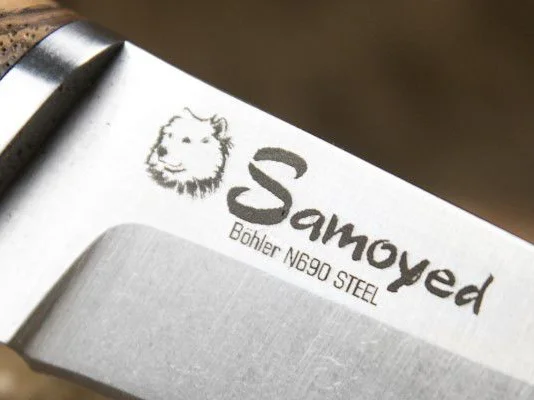
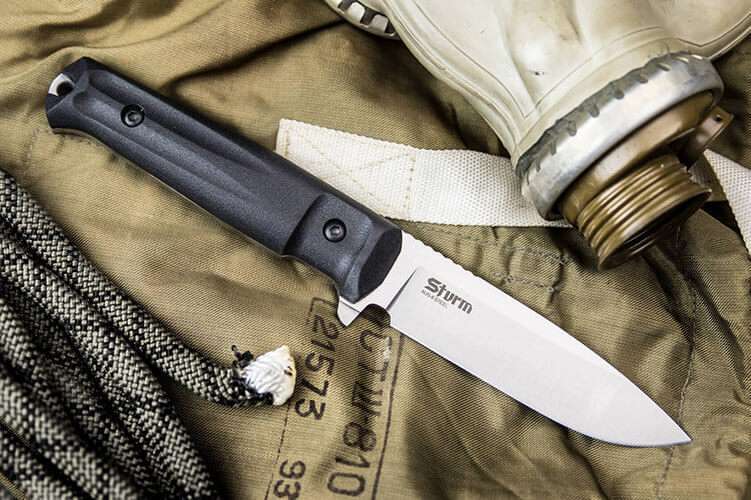
StoneWash belongs to the family of mass-finishing processes. Blades move with selected finishing media inside controlled equipment. Thousands of small, distributed contacts gradually create an even field of fine marks. The result is not paint, plating or a film: it is the steel surface itself, mechanically finished.
The pattern looks random, but a repeatable finish depends on deliberate preparation, media selection, machine settings and inspection.
In modern vibratory finishing, workpieces and purpose-selected media travel together in a moving bowl or trough. Their relative motion produces repeated rubbing and very small impacts across the exposed surface. Industrial references describe the same family of equipment for deburring, descaling, cleaning, smoothing, burnishing and polishing.[3][6]
A knife blade requires its own process window. Media shape and hardness, loading, water and compound dosage, vibration, time, blade geometry and the condition of the steel before finishing can all change the outcome. This is why “stonewashed” is a description of appearance and method—not a complete process specification.
At Kizlyar Supreme, a programmable vibratory-finishing system uses different media and regimes to level, smooth or polish surfaces and to create finishes including StoneWash.[1] The process is integrated with the rest of blade manufacture rather than treated as a cosmetic afterthought.
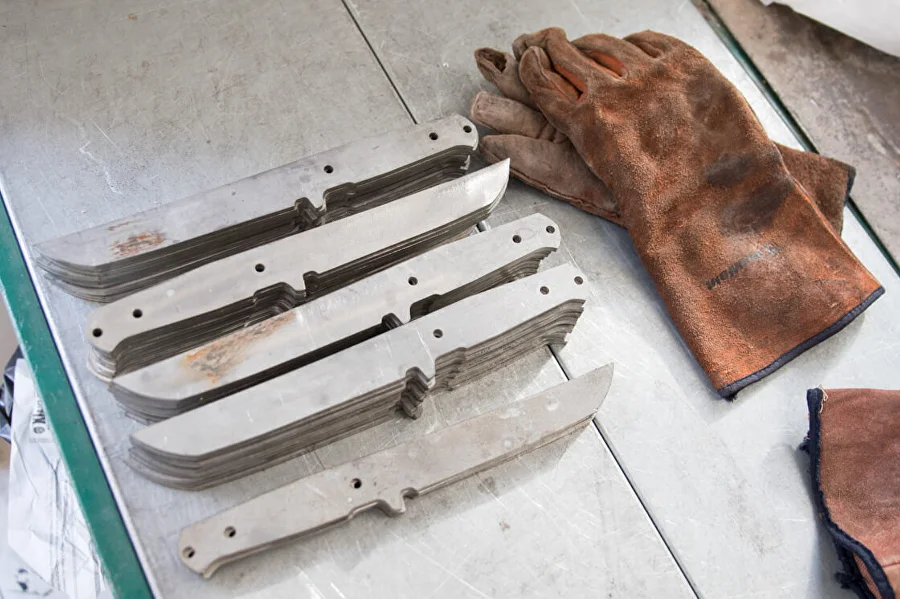
The principle predates the motor. Historical descriptions trace mass finishing to metal objects polished in rotating barrels with sand or stones. Industrial patents from the twentieth century then document machines designed to make the motion more consistent, faster and easier to control.[7]
Craft workers learned that metal could be smoothed by moving it repeatedly against sand, stone or other abrasive material
Rotating containers turned the basic idea into a repeatable way to process many parts together
By the mid-twentieth century, patents described vibratory equipment for cleaning, rounding, burnishing and polishing metal parts[6]
Programmable machines, engineered media and measured dosing now make distinct finishes reproducible across production
StoneWash makes a working knife easier to enjoy: less glare, less conspicuous carry marks and no applied film to peel away. Kizlyar Supreme selects its texture together with the steel and blade design, so the finish belongs to the knife’s purpose as well as its appearance.
A mirror-like surface returns light coherently. StoneWash interrupts that continuous reflection, producing a quieter, less uniform visual response
The pre-existing pattern can make light carry marks less conspicuous. This is not “scratch-proof”: sufficiently hard contact can still mark the blade
Corrosion behaviour still depends primarily on alloy, heat treatment, surface condition, contamination and care. Stainless remains corrosion-resistant, not corrosion-proof
We do not claim that StoneWash automatically improves corrosion resistance. A mechanically finished surface may behave differently from a polish, blast or coating, but the result depends on roughness, embedded contamination, passivation and the steel itself. Clean the blade after salt, food acids, sap or moisture and dry it before storage.
We value StoneWash as a responsible, uncoated option: it creates the finish directly in the blade steel, avoiding a deposited film and some coating-specific processing chemistries. It gives our customers practical looks without a layer that can peel in use.
Because the surface is mechanically created, there is no added layer intended to wear, peel or chip from the blade in use
Some metal-finishing processes generate hazardous wastewater, sludge or air emissions. OSHA documents serious occupational hazards from hexavalent chromium in chrome electroplating.[8][9]
Mass finishing commonly uses media, process water and compounds. Those inputs and the removed solids still require suitable selection, recirculation, treatment and disposal.[3][5]
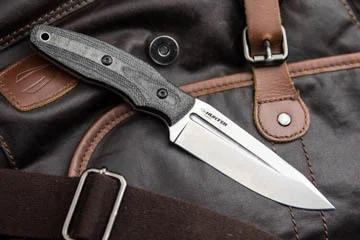
Surface treatment is selected after considering the model’s use, blade geometry, steel and visual language. A working outdoor knife, a compact EDC and a limited edition do not necessarily need the same texture or process duration.
We also distinguish StoneWash from TacWash. Both are uncoated mechanical finishes, but TacWash is Kizlyar Supreme’s own multi-stage route with a deeper grey, strongly non-reflective character. The names should not be used as if the processes were identical.
No. It is a mechanical surface-finishing process. The visible texture is created on the blade steel itself rather than deposited as a separate film.
There is no applied StoneWash layer to peel or chip. The underlying steel can still be scratched, dented or corroded if it is subjected to sufficient force or poor care.
No. Corrosion resistance depends on the steel, its heat treatment, the complete surface condition and maintenance. Clean and dry any knife after exposure to salt, acids, moisture or plant material.
No industrial process should be described as impact-free. StoneWash can avoid a deposited coating and some coating-specific chemistries, but mass finishing still uses energy, media and usually process water and compounds that must be managed responsibly.
No. Media, compound, water, loading, motion, time, blade geometry and starting surface all influence the result. Controlled production can create a consistent family resemblance while fine variation remains part of the finish.
StoneWash is a broad category of media finishing. TacWash is Kizlyar Supreme’s own multi-stage, low-reflection finish with its own process development and visual character.
Discover the know-how behind our blades and find a Kizlyar Supreme knife that fits the way you work.
Discover the finishes, steels and design choices that make a Kizlyar Supreme knife a practical companion—and find the model that feels right for you.