


Critical stages stay connected
Design decisions can be followed through production, testing and inspection instead of disappearing between unrelated suppliers.

Find your knife
From compact everyday carry to full-size field tools, start with the way you plan to use your knife.
Start here
Built for the job
See how steels, handle materials, sheath systems and controlled processes become a complete Kizlyar Supreme knife.
Explore the essentials
 The complete guideOpen Materials & Technologies
  Explore the hub sectionBlade steels
  Explore the hub sectionTechnologies & finishes
 Evidence before adjectives
Explore how steel choice, heat treatment, geometry and finishing shape performance in the real world.
Featured expert guides
Made in Dagestan
Meet the people, production experience and ideas behind Kizlyar Supreme knives.
Company essentials
Here when you need us
Find warranty information, authorised dealers and direct help from Kizlyar Supreme.
Support essentials
Kizlyar Supreme manufacturing · Kizlyar, Dagestan
A useful knife is not created by one impressive machine or one specification. It comes from a complete system: purposeful design, suitable steel, controlled heat treatment, repeatable geometry, skilled finishing, careful assembly and a sheath developed for the knife.
The manufacturing principle
Kizlyar Supreme brings design, blade production, heat treatment, handle machining, finishing, assembly, sharpening and inspection together inside one production system. That connection lets us match steel, geometry, handle and carry system to the work the knife is expected to do—and improve an established model when better materials or better solutions become available.
Design decisions can be followed through production, testing and inspection instead of disappearing between unrelated suppliers.
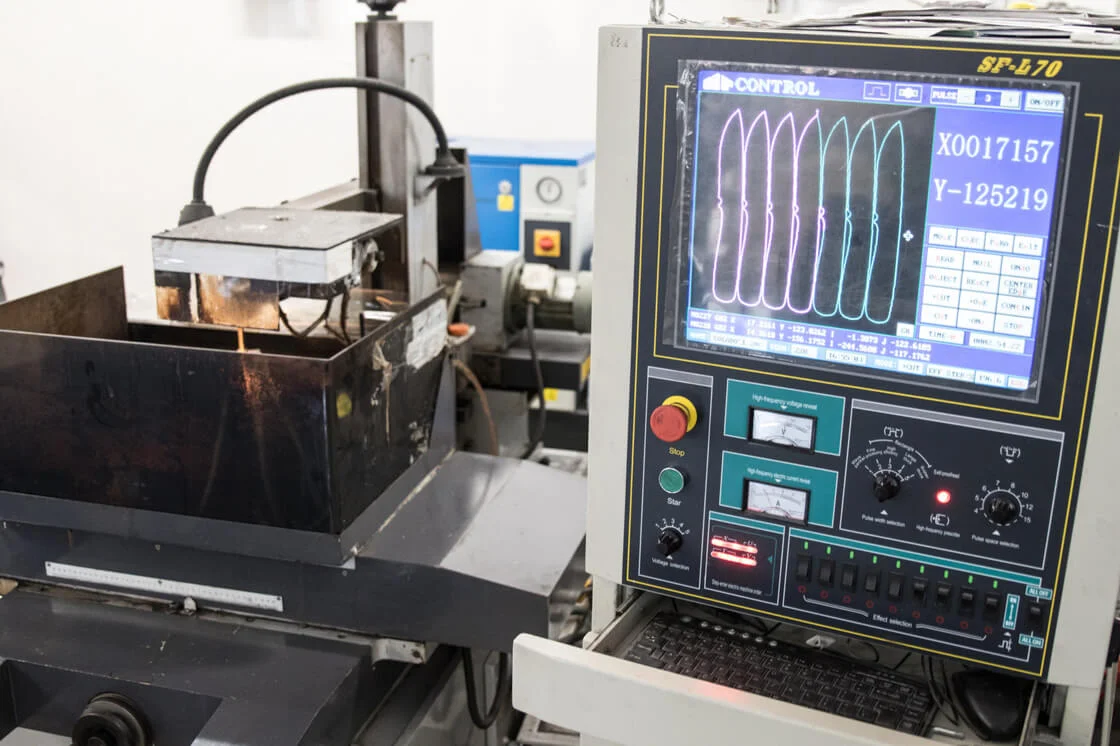
Laser, spark-erosion and CNC equipment help reproduce demanding geometry and fit across serial production.
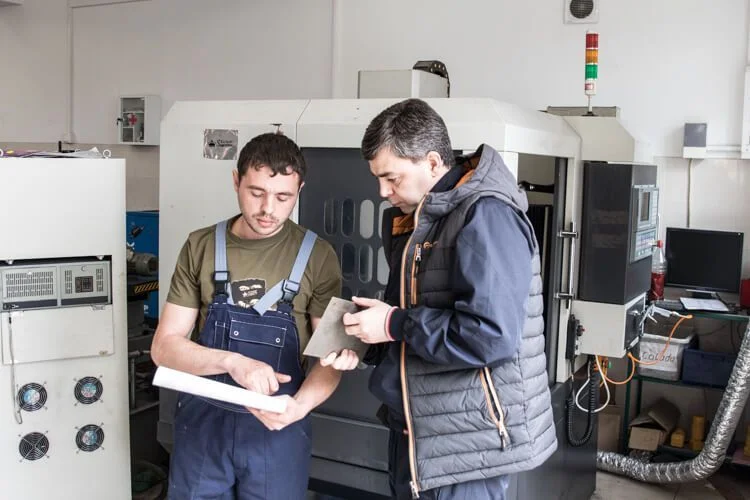
Experienced specialists choose processes, set equipment, finish difficult geometry, assemble, sharpen and check the result.
Our lifetime warranty against manufacturing defects connects the factory’s work to the owner who relies on the knife.
From idea to finished knife
The exact route changes with the model and material. This is the core sequence behind Kizlyar Supreme serial knife production.
We define the intended work, geometry, ergonomics, construction, steel and sheath concept. Prototypes are tested, shown to users and refined before a production route is finalized.
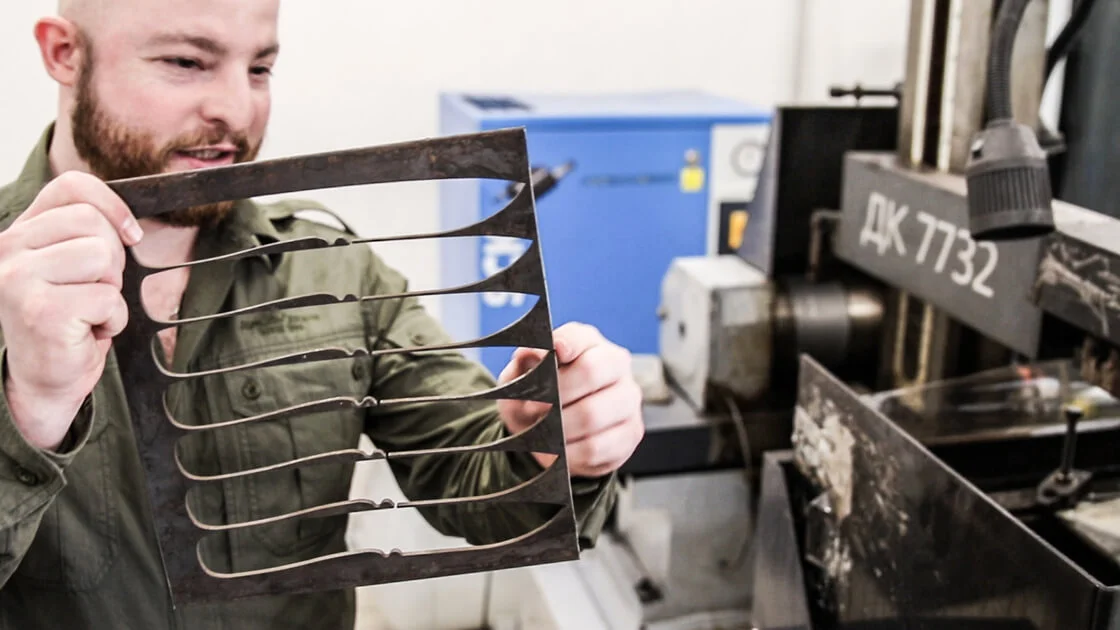
Blade blanks begin in sheet steel selected for the model. Laser and spark-erosion equipment prepare accurate profiles and technically demanding components.
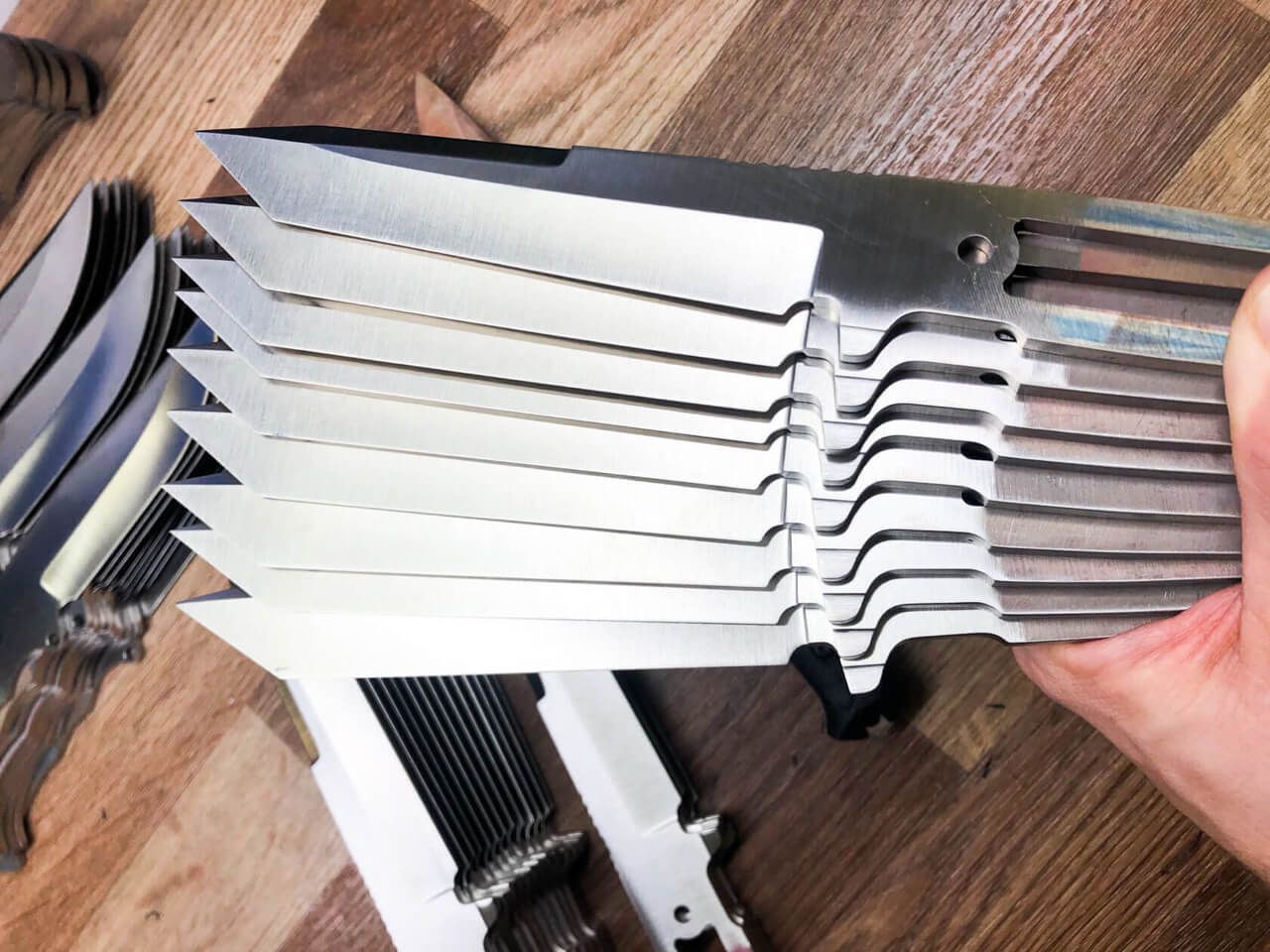
Contours, holes, fullers, bevels and handle components are produced to controlled dimensions. CNC brings repeatability; specialist judgement protects the geometry.
Temperature, time, atmosphere, cooling, tempering and—where appropriate—cryogenic treatment are selected for the individual steel and the performance target.
Depending on the design, blades move through blasting, multi-stage vibratory finishing, TacWash or skilled manual work. Complex zero-ground convex edges require their own route.
Wood, G10, elastomers and other materials are machined or formed for the model. The sheath is developed as functional equipment for retention, extraction and carry.
Specialists fit the components, compare the result with the reference model and perform the final sharpening only after safe assembly operations are complete.
Geometry, fit, finish, edge and sheath function are checked before the knife is packed. Direct manufacturer support continues through our published warranty.
Inside the manufacturing route
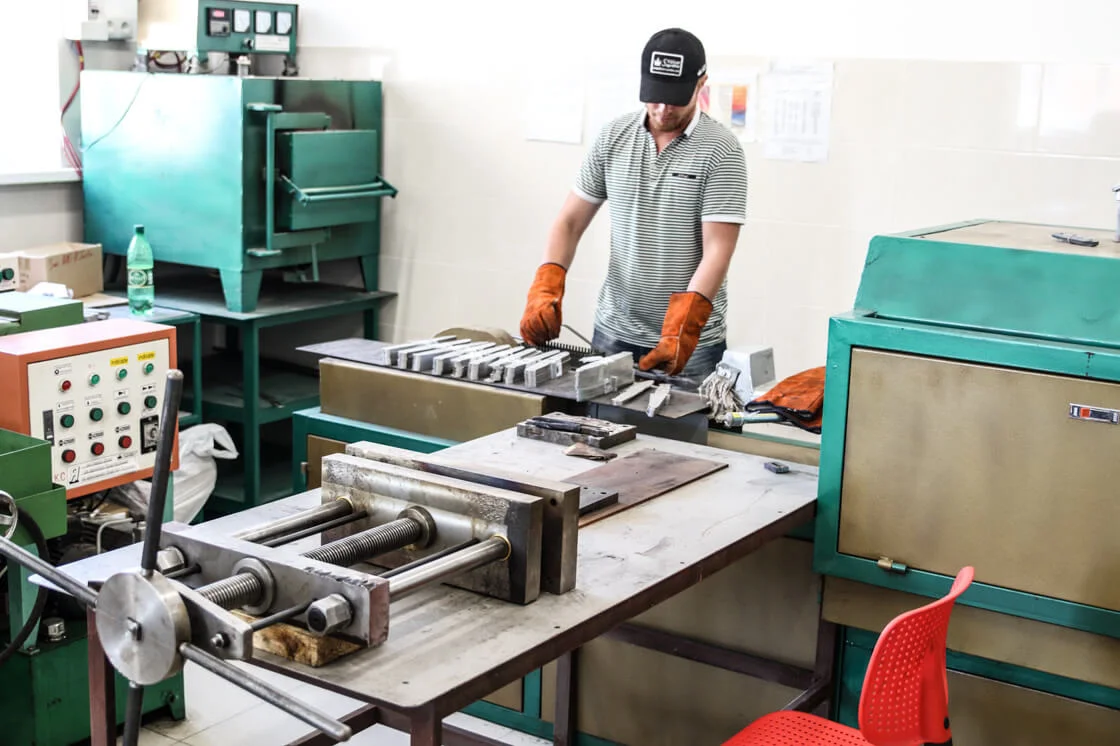
Every operation moves the knife closer to its intended work. These Kizlyar Supreme factory photographs show the relationship between accurate serial processes and the specialists responsible for the result.
Heat treatment · precision beneath the surface
Two blades can look almost identical. The difference becomes clear when the cutting starts. Beneath the finish, heat treatment shapes the steel’s internal structure—and helps determine whether the edge stays useful, resists chipping and inspires confidence through repeated use.
Our approach is precise and steel-specific. Kizlyar Supreme follows each steel manufacturer’s recommended procedures through separate batch protocols, controlling heating, holding time, atmosphere, cooling and tempering. We never combine different steel grades in an averaged heat-treatment run. Selected steels also receive cryogenic treatment where their defined cycle calls for it.
Specialist expertise · Sergey Burov
Sergey Burov, a highly respected Russian heat-treatment specialist, regularly consults our team and periodically visits the Kizlyar Supreme factory. Together, we refine steel-specific heat-treatment cycles and explore further improvements, including cryogenic processing for selected grades.
That collaboration brings specialist know-how into the repeatable processes behind knives made for everyday use—not just a single showcase blade.
Watch Sergey at our factoryOur own nitrogen generation station
We produce extremely pure nitrogen on site and feed it directly into our furnaces. This controlled atmosphere displaces oxygen, helping limit oxidation and decarburization—the loss of carbon at the blade surface during heating.
Temperature, time and atmosphere work together. We control all three to protect the steel while developing the properties the knife needs.
See our furnace controlsSteelmaker knowledge · factory discipline
Steels with similar names or hardness targets can still need different heating, cooling and tempering schedules. A compromise cycle can leave an edge too soft to hold sharpness well or too brittle for its intended task.
We keep every batch separate and follow its steel-specific protocol. The goal is the right balance of hardness, wear resistance and toughness, repeated consistently—not simply an impressive hardness number or a good-looking finish.
Precision and skilled hands
The best manufacturing route uses automation for repeatable operations and experienced people where judgement, feel and careful finishing matter most.
Grind symmetry strongly affects cutting. During machining and finishing, the cutting edge must also be protected from overheating, because geometry and heat treatment have to survive the complete process together.
Programmed machining centres produce fullers and handle components with complex geometry. One trained operator can supervise several processes while the programmed toolpath preserves repeatability.
Programmable vibratory finishing uses different media and regimes to level, smooth or polish surfaces and create finishes such as stonewash. Other models require blasting or manual finishing.
Stainless, tool and powder steels do not respond identically. The same is true of G10, wood, elastomers, polypropylene, polyamide, Kydex and leather used elsewhere in the complete knife system.
Assembly remains careful manual work. Reference samples and defined sequences help specialists confirm orientation, fit and completeness, especially on more complex constructions.
Edge, point, fit, finish, operation and sheath retention are checked as parts of one product—not as unrelated components that merely happen to arrive in the same box.
Lean · 5S · visible quality
Continuous Improvement
Our approach is based on Lean manufacturing, 5S workplace organization and continuous improvement. Clean, clearly arranged work areas, visible standards and short production flows reduce wasted motion and make unusual results easier to notice.
We want defects reported early, when they are easiest to understand and correct. The objective is not to hide a mistake or punish the person who found it; it is to protect the next operation and learn enough to prevent repetition.
Watch inside the factory
These official Kizlyar Supreme films show the details behind the page. They load only when selected, keeping the page fast before you choose to watch.
A factory discussion with Sergey Burov about process optimisation, steel behaviour and additional cryogenic treatment.
A concise English-subtitled explanation of temperature zones, conveyor time and the protective atmosphere.
Why symmetry, repeatability and control of heat at the cutting edge matter to real performance.
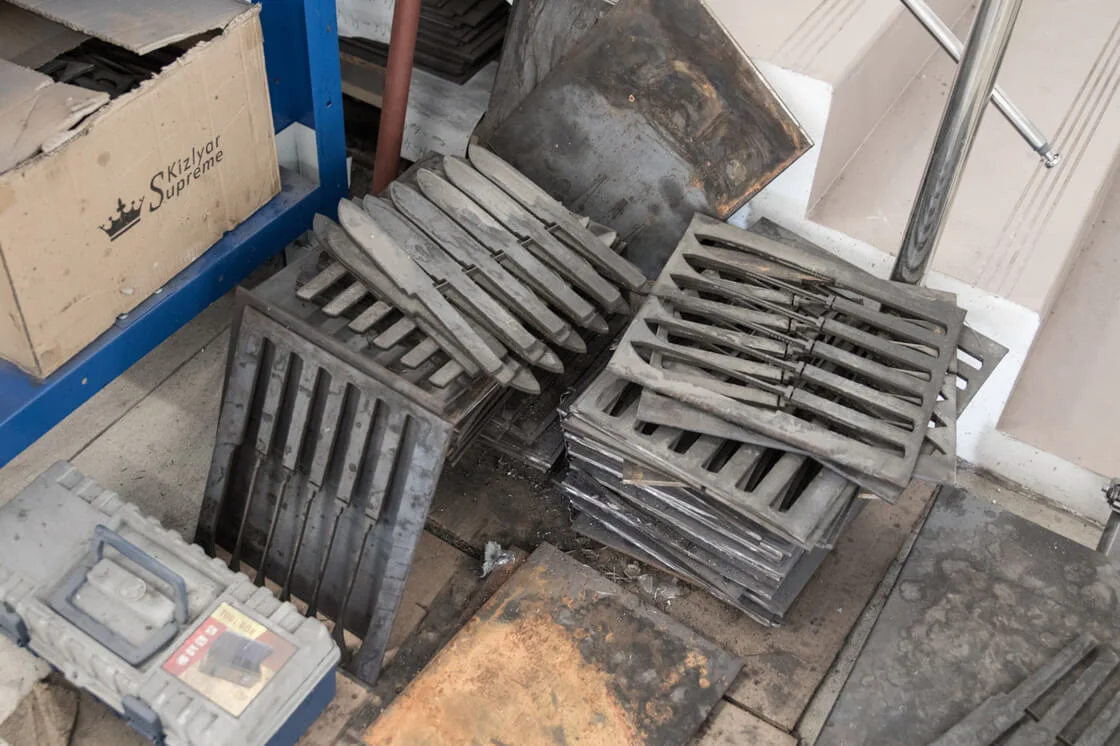
Automated toolpaths give demanding details the repeatability required for serious serial production.
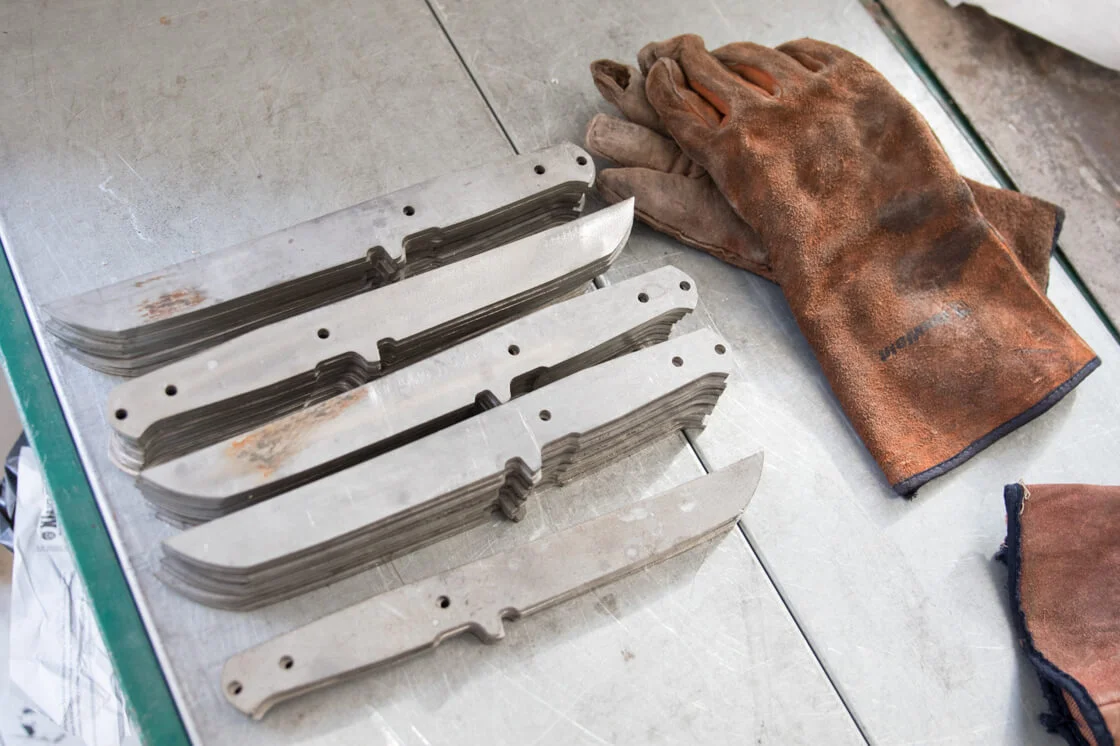
Different media and regimes create controlled surfaces while reducing unnecessary manual processing.
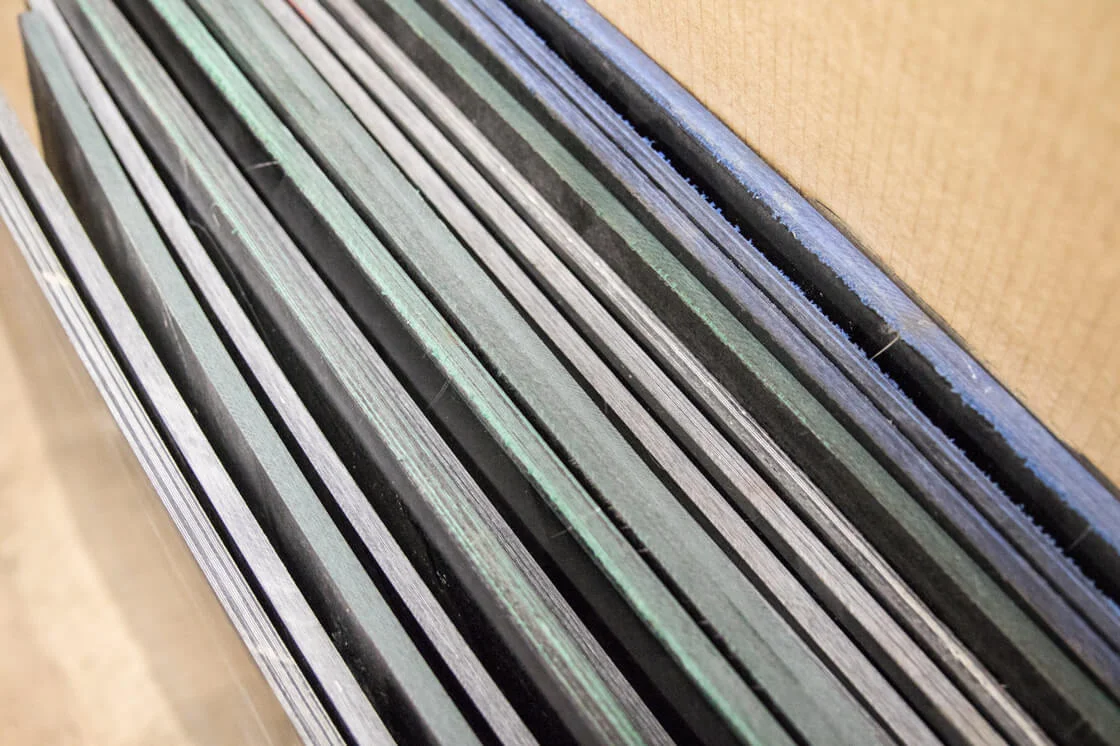
Design adaptation, 3D production drawings, material choice, ergonomics, process planning and real-use prototype tests.
The next manufacturing chapter
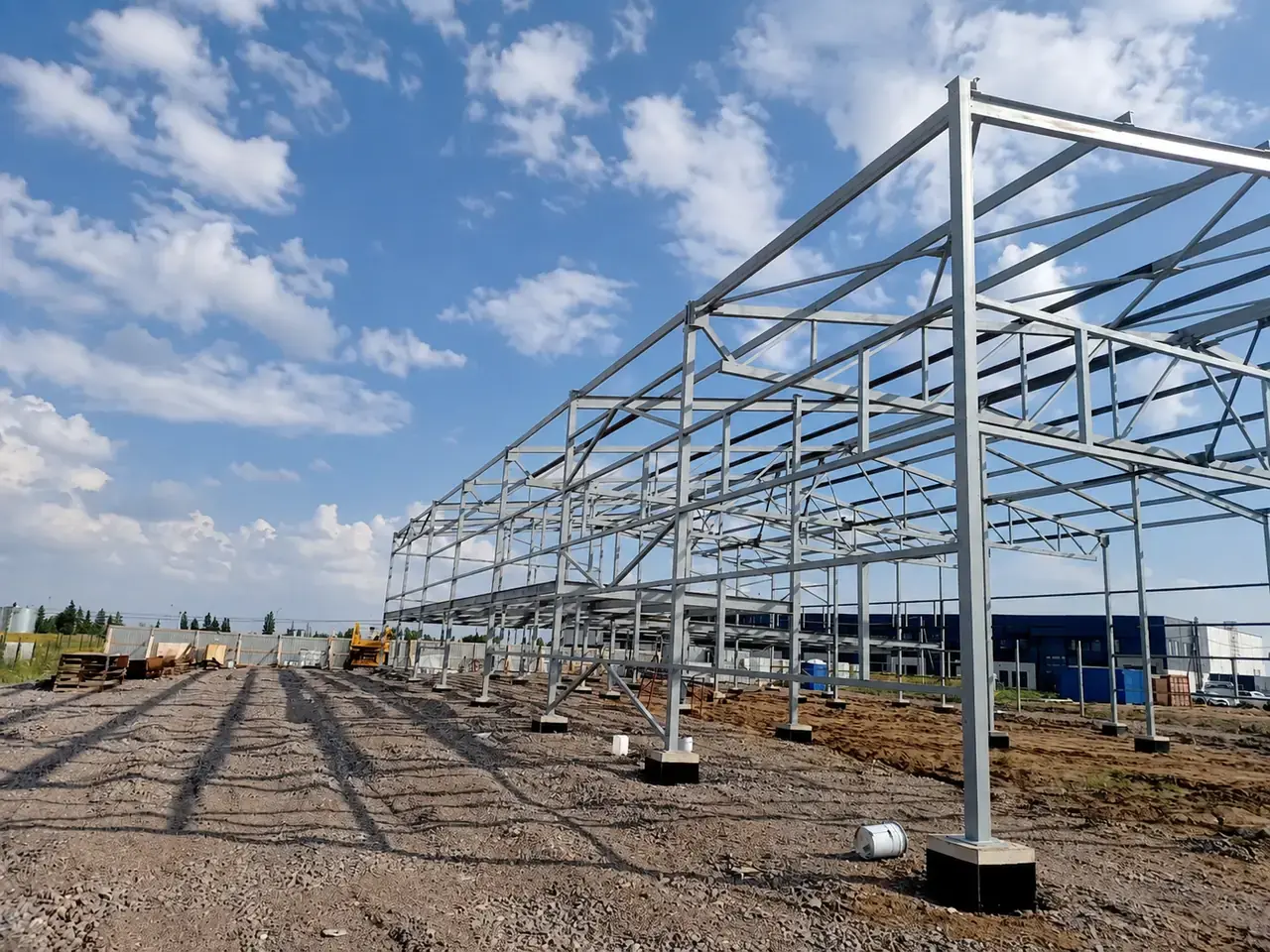
Our main knife factory operates in Kizlyar, Dagestan. A second Kizlyar Supreme manufacturing facility is now in the making in Pushkin, Saint Petersburg.
The objective is not growth for its own sake. New capacity should strengthen consistent quality, useful product development, availability and our ability to support customers and long-term partners.
Read the Kizlyar Supreme storyEvidence you can inspect
Our official films document individual operations in detail. Independent publications have also walked through the factory, photographed the work and described the relationship between technology, skilled people, process discipline and the finished knife.
A detailed visit covering the full manufacturing sequence, user-led development, Lean quality gates and surface finishing.
Hi-Tech Mail · ManufacturingAn outside look at materials, laser cutting, CNC, heat treatment, manual assembly, sheaths and final inspection.
MAXIM · Photographed visitA stage-by-stage report from steel sheet and grinding through controlled-atmosphere hardening, finishing and assembly.
Kompaniya · Business interviewThe manufacturing philosophy, factory growth, Lean management and the international experience behind the company.
BERLOGA · Independent filmA long-form factory tour addressing design, sharpening, production origin and prototype development.
Kizlyar Supreme · Factory playlistOur official video collection covers heat treatment, CNC machining, grinding, surface finishing, design and other work inside the factory.
Manufacturing questions
Our knives are manufactured at the Kizlyar Supreme factory in Kizlyar, Dagestan, Russia. A second manufacturing facility is being developed in Pushkin, Saint Petersburg.
Yes. Our connected production system covers product engineering, blade manufacture, heat treatment, handle production, finishing, assembly, sharpening and inspection. We buy specialist raw materials and standard components where appropriate, but we control the critical operations that determine the finished knife.
Each steel batch is processed separately under a dedicated protocol following the steel manufacturer’s recommended procedures. Our electronically controlled conveyor furnaces regulate three heating zones with 1°C control. An on-site nitrogen generation station supplies extremely pure nitrogen directly to the furnaces to help protect the blade surface. Conveyor speed controls heating time; cooling, tempering and, for selected steels, cryogenic treatment follow the defined cycle.
Both are essential. Precision equipment gives serial production repeatability, while experienced specialists define the process, set and monitor machines, handle complex finishing, assemble, sharpen and judge the finished result.
We use Lean, 5S and continuous-improvement principles, with quality checks distributed throughout production. A team member should not accept, create or pass forward a known defect; finding a problem early makes correction and learning faster.
Yes. Our models begin with intended use, sketches and engineering work, then move through prototypes, production planning and testing. Feedback from owners, specialists and exhibition visitors can influence both new designs and later improvements.
Because safe retention, comfortable extraction and practical carry directly affect the user’s experience. For many fixed blades, we develop the knife and sheath system together and continue improving materials and attachment details over time.
Our own Kizlyar Supreme products are the clearest demonstration of our manufacturing capability and remain our principal international focus. We can also consider selected fixed-blade manufacturing partnerships, including long-term blade supply or complete knives for established partner brands.
Explore Kizlyar Supreme knives as complete tools—or contact us about international distribution and carefully selected manufacturing cooperation.