


Cutting role
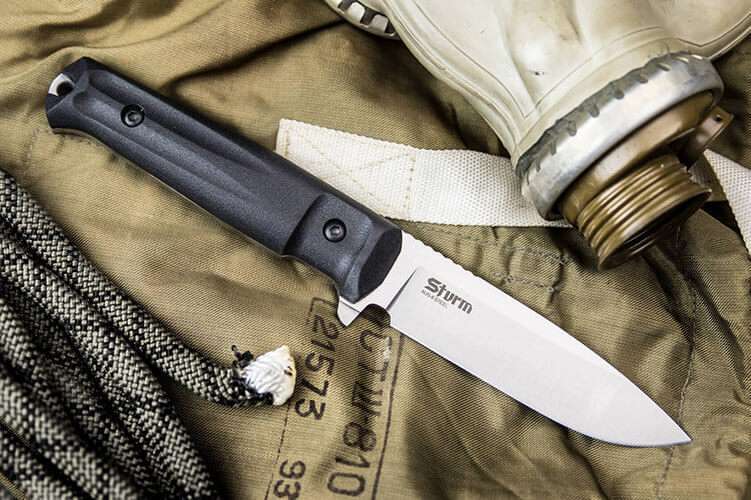
Edge geometry, hardness, toughness and wear resistance must support the work the knife is meant to do.

Find your knife
From compact everyday carry to full-size field tools, start with the way you plan to use your knife.
Start here
Built for the job
See how steels, handle materials, sheath systems and controlled processes become a complete Kizlyar Supreme knife.
Explore the essentials
 The complete guideOpen Materials & Technologies
  Explore the hub sectionBlade steels
  Explore the hub sectionTechnologies & finishes
 Evidence before adjectives
Explore how steel choice, heat treatment, geometry and finishing shape performance in the real world.
Featured expert guides
Made in Dagestan
Meet the people, production experience and ideas behind Kizlyar Supreme knives.
Company essentials
Here when you need us
Find warranty information, authorised dealers and direct help from Kizlyar Supreme.
Support essentials
Choose a knife by what it needs to do. Explore Kizlyar Supreme blade steels, handle materials, sheath systems, heat treatment and finishes—each selected and refined for practical performance.
The right material is only the starting point. Kizlyar Supreme works with one of the broadest selections of blade steels in Russian serial knife manufacturing, applying that variety at industrial scale.
We match each steel or specialist polymer blend with heat treatment, blade geometry, handle design, sheath construction and the knife’s intended use. Years of in-house production, controlled testing and feedback from knife users help us refine cutting performance, toughness, corrosion resistance, grip, durability and ease of care.
Edge geometry, hardness, toughness and wear resistance must support the work the knife is meant to do.
Moisture, cold, heat, dirt and repeated field use affect the balance of corrosion resistance, grip and durability.
A practical knife should match realistic sharpening, cleaning and care—not only laboratory performance.
Blade, handle and sheath are tested as one carry system, including retention, extraction and long-term contact.
From practical stainless steels to high-performance tool and powder-metallurgy grades, each steel is matched to a model, geometry and production purpose.
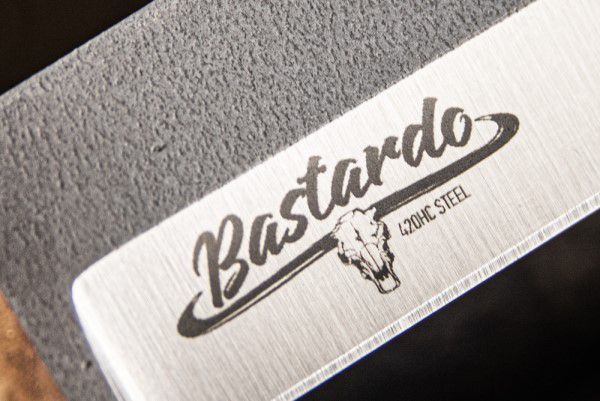
A practical, corrosion-resistant grade valued for toughness, straightforward maintenance and dependable working performance.
Explore 420HC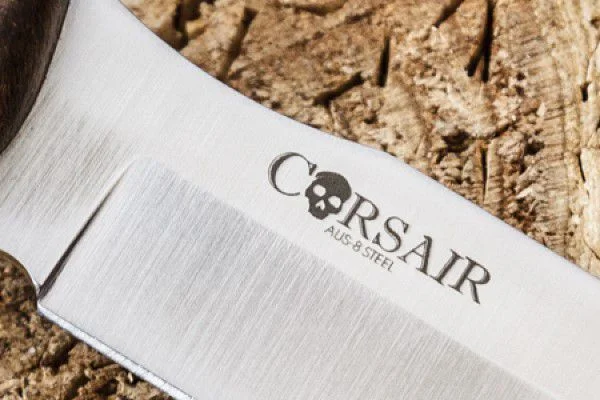
A balanced working steel with good corrosion resistance, toughness and easy field sharpening.
Explore AUS-8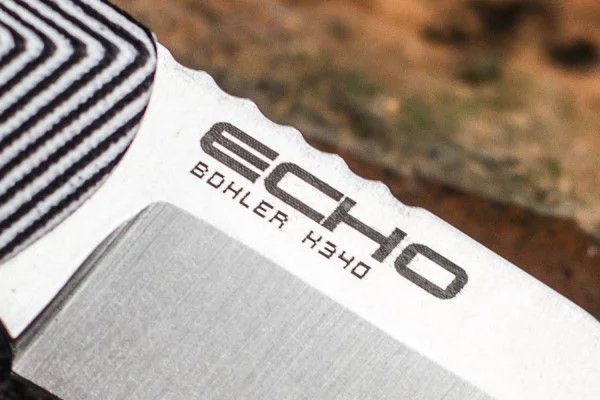
A remelted tool steel balancing wear resistance, toughness and manufacturability for demanding fixed blades.
Explore K340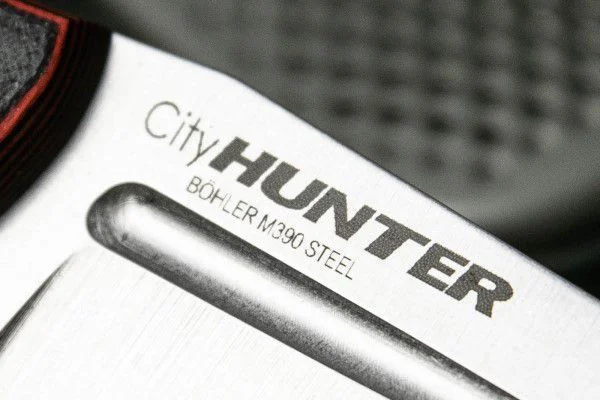
A premium stainless grade chosen where high wear resistance and long cutting life matter.
Explore M390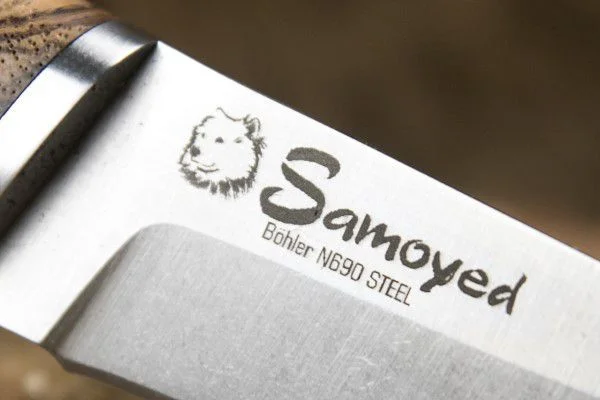
A well-balanced stainless knife steel combining corrosion resistance, edge performance and toughness.
Explore N690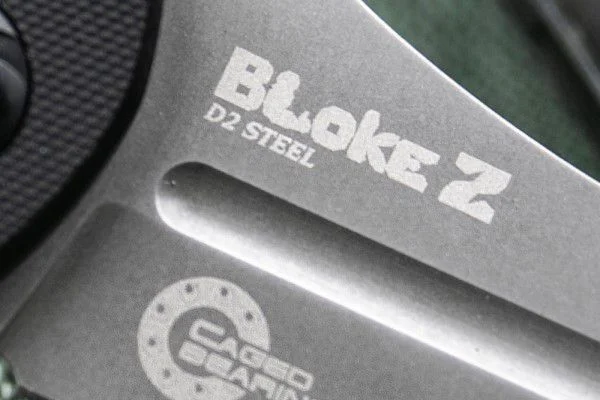
A widely proven tool steel known for wear resistance and an assertive, long-lasting cutting character.
Explore D2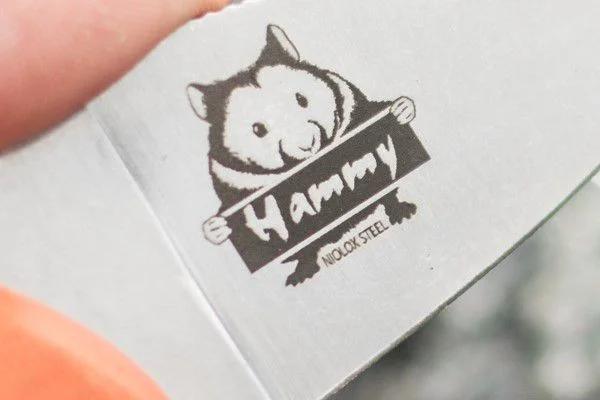
A German stainless steel combining practical corrosion resistance with strong edge stability and fine cutting performance.
Explore Niolox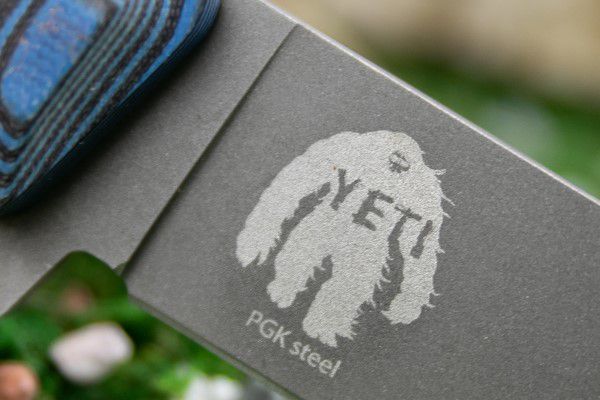
A high-performance German tool steel selected for strong wear resistance, toughness and aggressive cutting.
Explore PGK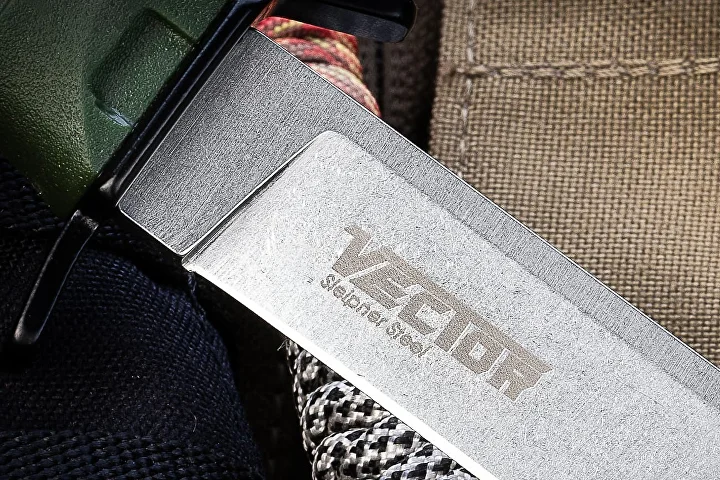
A tough, wear-resistant Uddeholm grade capable of high hardness while maintaining useful resistance to edge chipping.
Explore SleipnerGrip security, temperature, moisture, shape and tactile character all affect how a knife feels after the first few minutes.
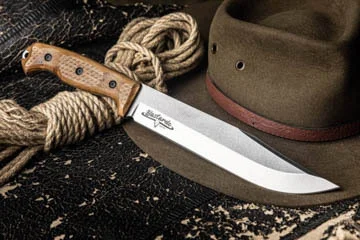
Dense, expressive wood whose individual grain gives each Kizlyar Supreme handle a distinct natural identity.
Explore walnut root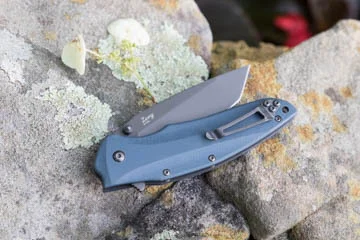
A stable, moisture-resistant laminate that supports secure texturing, precise shaping and hard-use handle construction.
Explore G10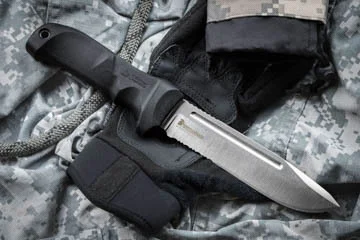
A resilient, warm-touch material valued for grip in wet or cold conditions and for not absorbing water.
Explore Kraton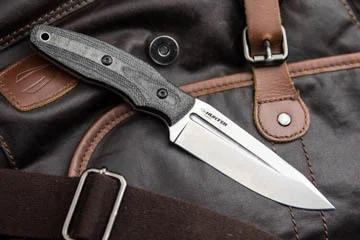
A durable layered composite with a warm feel, stable structure and tactile character that develops through use.
Explore MicartaKizlyar Supreme treats retention, extraction, edge contact and carry options as part of the knife—not as packaging added afterwards.
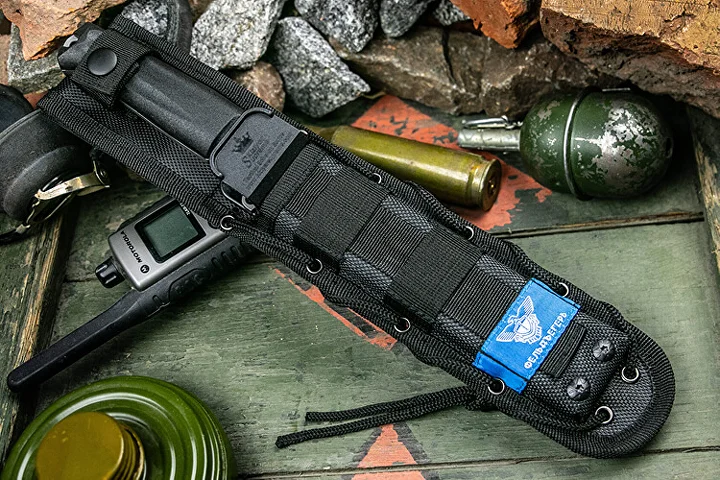
A strong, abrasion-resistant outer used with a model-specific polymer insert for secure carry and flexible attachment.
Explore ballistic nylon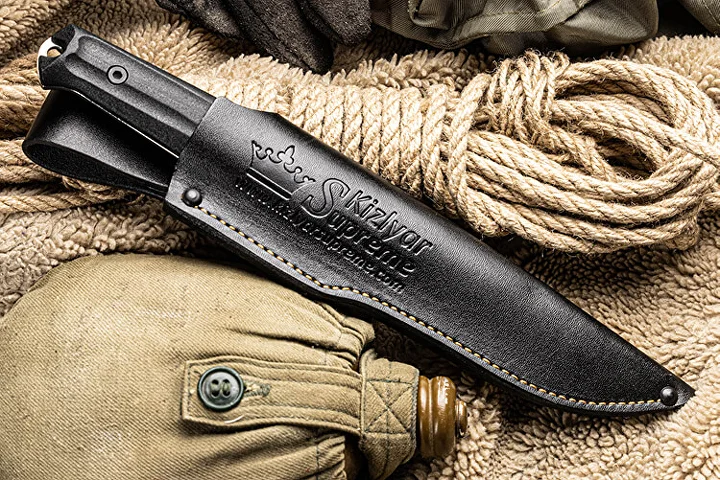
A carefully finished natural material selected for durable carry, tactile warmth and classic presentation.
Explore leather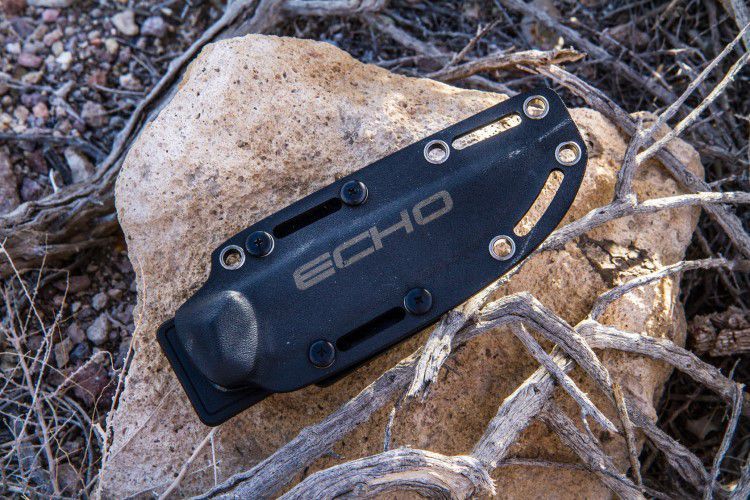
A rigid thermoformed material used for precise, compact sheaths with reliable retention and multiple carry options.
Explore Kydex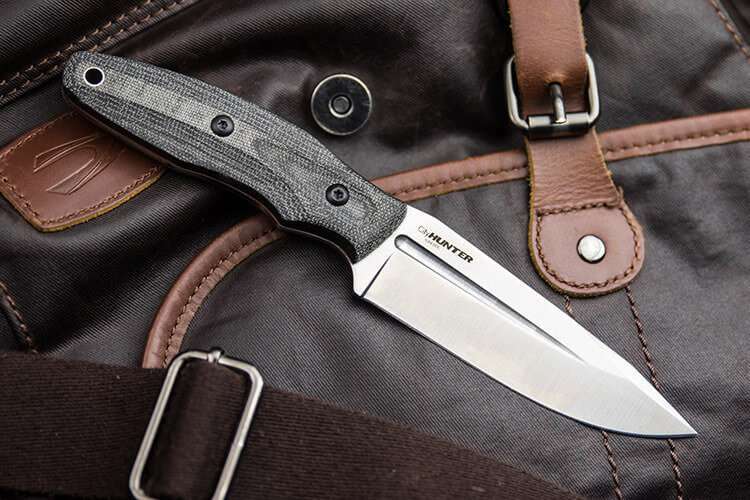
A tough, dimensionally stable material selected for rigid sheaths, structural handles and attachment components.
Explore polyamide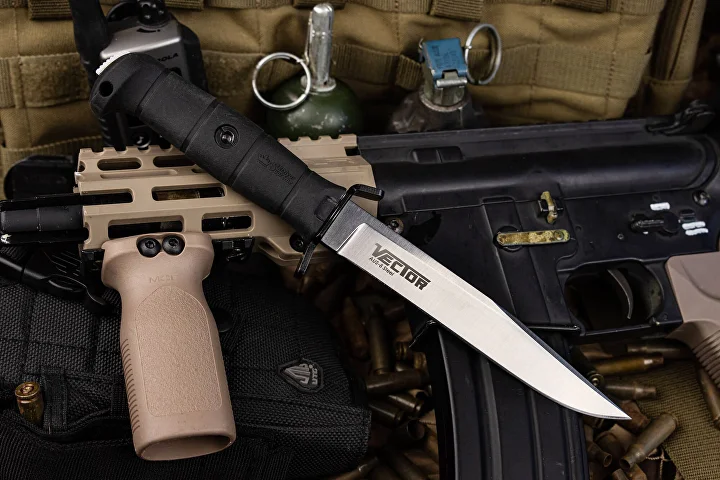
A light, moisture-resistant material with controlled flexibility, precise retention and edge-conscious blade contact.
Explore polypropyleneHeat treatment, controlled sub-zero processing and surface finishing turn selected steels into dependable knives. These guides explain what each process can do, where its limits lie and how it fits into Kizlyar Supreme production.
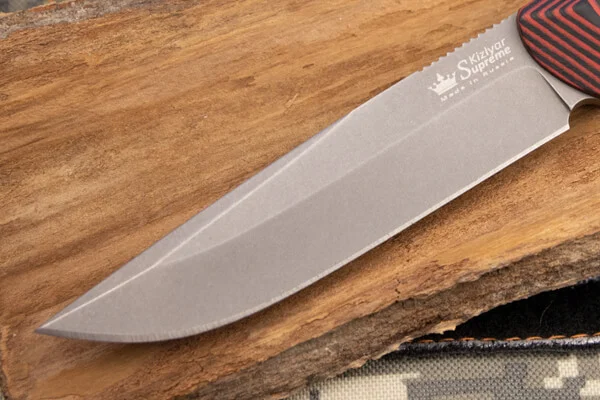
A distinctive low-reflection finish developed for practical use while giving each blade an individual visual texture.
Explore TacWashHow controlled mass finishing creates a low-glare surface that disguises small use marks without adding a coating.
Explore StoneWash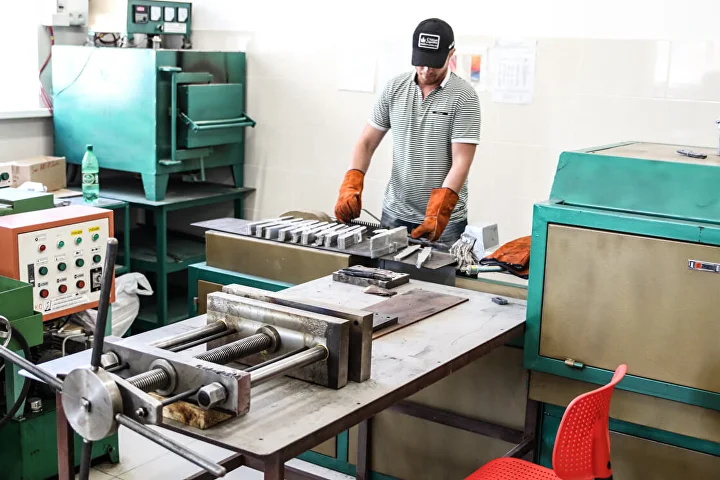
A connected explanation of annealing, austenitizing, quenching, hardening, tempering and verification.
Explore heat treatmentWhat sub-zero treatment changes after quenching, which benefits can be measured and why the complete heat-treatment route matters.
Explore cryogenic treatmentThe history, metallurgical mechanisms, published evidence and practical limits of repeated controlled heating and cooling.
Explore thermocyclingUnderstand the language, trade-offs and manufacturing choices behind modern knife steel—then see how Kizlyar Supreme turns those principles into repeatable performance.
Why stainless means corrosion-resistant rather than corrosion-proof, how passivation works and what care still matters.
Read the guideWhy the phrase is not a single knife-steel grade, and which specifications matter more than a marketing label.
Read the guideSee how wear resistance, toughness, corrosion resistance, geometry and heat treatment work as one system.
Read the guideSeparate craft mythology from metallurgy and compare both routes by their real controls, risks and results.
Read the guideCarbon, chromium, vanadium and other elements matter through combinations, microstructure and processing—not in isolation.
Read the guideThere is no single best sheath material for every knife. Kizlyar Supreme selects the material and geometry around the blade, draw, retention and attachment system.
Light, moisture-resistant and blade-friendly, with controlled flexibility for molded sheaths and internal inserts. Read the guide →
Rigid, tough and dimensionally stable for detailed molded structures and selected model-specific sheath designs. Read the guide →
A thermoformed sheet material for compact, rigid shapes and precise retention around the individual knife profile. Read the guide →
Material names are only the beginning. Geometry, heat treatment, formulation and the complete knife design determine real performance.
A broad choice of stainless, tool and powder-metallurgy steels lets us tune a knife for the performance its owner needs—edge retention, toughness, corrosion resistance, sharpening ease and value—rather than forcing every model into one compromise. Our industrial production experience then helps us match each steel with the right heat treatment and blade geometry.
There is no universal best steel. A high-wear steel may hold an edge longer, while a tougher or more corrosion-resistant grade may be better for another environment. Kizlyar Supreme matches steel, hardness and geometry to each knife's intended role. Explore the performance trade-offs.
Regular production, market requirements and limited editions can use different grades. The model page and the individual product marking should be checked for the exact steel and finish.
Yes. Grip security, temperature, moisture, texture and long-term stability directly affect control and comfort. A strong blade cannot compensate for a handle poorly matched to the task.
Knife size, blade geometry, weight, retention and carry options differ. Polypropylene, polyamide, Kydex, leather and ballistic-nylon systems each solve a different set of practical requirements.
Not always. Steel, finish, handle or sheath configuration may vary by production run and destination. Check the exact model version or ask an authorised seller before purchase.
Explore models by use, size and construction, then open each product page for the available steel, handle and sheath combinations.