





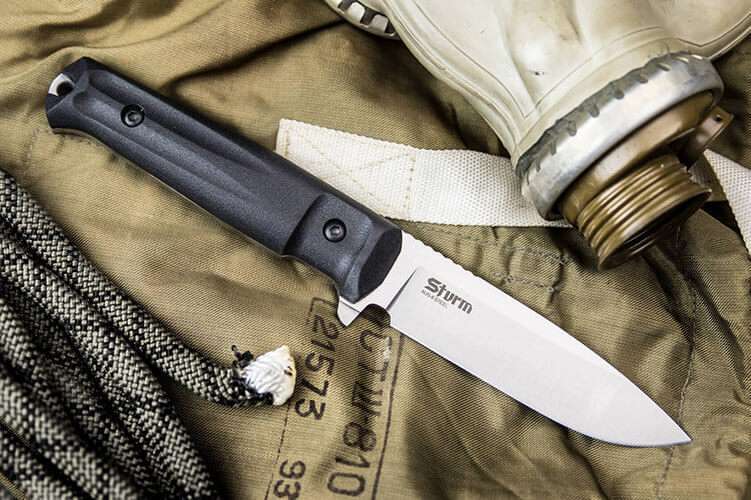


Hard martensite and a population of hard carbides can resist abrasion. Increasing carbide volume or hardness can improve controlled wear performance, but coarse or abundant brittle particles can become crack-initiation sites.
What to watch: carbide type, size and distribution; hardness; edge angle; abrasive being cutKizlyar Supreme steel guide
What makes a knife perform?
A lasting edge, confident cutting and easy ownership: discover how Kizlyar Supreme combines steel, heat treatment and geometry to give each knife the right working character
Practical guide · Evidence reviewed 10 September 2026
The central idea
The best knife is the one that fits your work
Your knife should make the job easier. Lasting sharpness, toughness, corrosion resistance and sharpening effort each matter differently in the field, at camp or in everyday carry. Kizlyar Supreme chooses the balance around the model’s purpose, so you can select the cutting character and ownership experience that suit you.
Wear resistanceHow strongly the hardened material resists loss and deformation at the edge
ToughnessHow much energy the material can absorb before cracking or chipping
Corrosion resistanceHow well the steel resists rust, pitting and chemical attack in its environment
MaintainabilityHow readily the edge can be restored with the tools and time actually available
The useful question
Do not ask “Which steel wins?” Ask “Which failure would matter most here: abrasive dulling, rolling, chipping, corrosion—or an edge that is difficult to restore away from the workshop?”
The performance triangle
Every alloy spends a limited design budget
Modern metallurgy can move the frontier—especially through cleaner melts, finer carbides and powder metallurgy—but it does not abolish physics. The microstructural features that help one property can constrain another.
A tough steel can absorb more energy before fracture and can support thinner geometry for some tasks. Toughness generally falls as hardness rises within one heat-treatment family, although alloy and microstructure can shift the balance.
What to watch: impact and lateral load, section thickness, notches, heat treatment and test orientationChromium in the matrix supports a passive film. Carbon and chromium tied into carbides are not simultaneously available for the same job, so alloy design and heat treatment must decide where those elements deliver most value.
What to watch: salt, acids, wet storage, surface finish, cleanliness and chromium in solutionThe performance map
A good knife lives inside the triangle—not at one corner
Moving toward one extreme changes the compromises elsewhere. Cleaner steelmaking, powder metallurgy and better heat treatment can expand the useful area, but the right point still depends on the job.
W · Wear resistanceUseful cutting life against the material being cut
T · ToughnessMargin against fracture, chips and impact damage
C · Corrosion resistanceReliability in the actual moisture and chemical environment
KS
system
system
We tune the complete knife, not the steel name in isolationKizlyar Supreme combines alloy choice, steel-specific heat treatment, blade and edge geometry, finish and real-use feedback to place each model where its intended work demands.
Sharpenability is part of performance
Wear resistance is useful because an edge resists abrasion. That same resistance also acts against the abrasive when you sharpen. Modern diamond and ceramic tools reduce the burden, but a five-minute field repair and a controlled workshop regrind are different requirements.
Steel is not the whole knife
Geometry decides the load before steel resists it
A thin blade behind the edge and a low included edge angle usually reduce cutting force. The same geometry also leaves less material to carry twisting, impact or contact with hard inclusions. A thicker or more obtuse edge sacrifices some cutting efficiency for greater damage margin.
Peer-reviewed knife testing confirms that blade angle, hardness/wear resistance and microgeometry all materially change measured cutting performance.[1] That is why comparisons are meaningful only when geometry, sharpening, material being cut and stopping criterion are controlled.
The steel’s job is to let the chosen geometry survive. A tough, clean microstructure may support a finer edge without chipping. A hard, wear-resistant structure may retain working sharpness through prolonged abrasive cutting. Neither advantage exists independently of the edge around it.
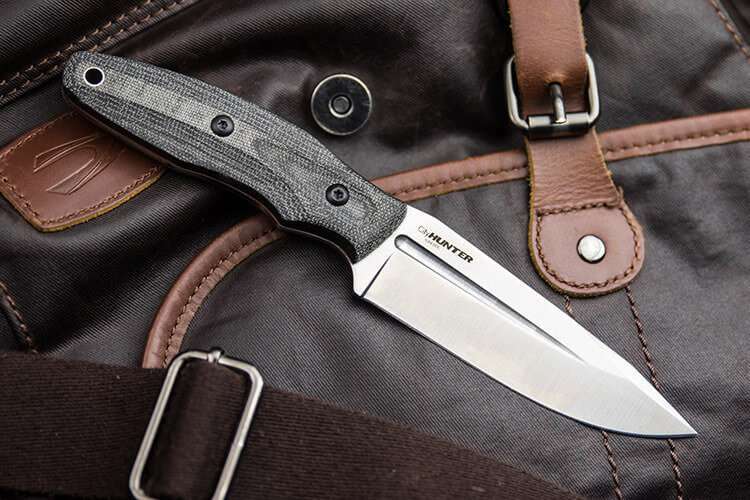
Steel enables geometry; geometry determines how the blade enters material and where stresses concentrate
A five-part system
Read a knife from use backwards
A credible comparison holds the full chain in view. Changing one link can outweigh an expensive change of steel.
Task and environmentSlicing, chopping, dirty media, bone contact, humidity, salt and maintenance access
Blade geometryStock thickness, grind, thickness behind the edge, edge angle and point design
Alloy and cleanlinessMatrix chemistry, carbide or nitride population, inclusions and production route
Heat treatmentAustenitizing, quench, sub-zero step where appropriate, tempering and distortion control
Sharpening and finishAbrasive choice, angle accuracy, burr removal, surface texture and overheating control

Kizlyar Supreme workshop perspective
Why more expensive does not always mean better
Our 2026 film compares real priorities: cutting geometry, edge damage, field repair, heat treatment and price. The demonstrations show particular knives in particular conditions; the scientific sources below explain why those variables matter.
Three design briefs
Different knives should make different compromises
Start with the work you enjoy, then choose the balance that makes your knife a dependable companion. These three common priorities help you find your place in the Kizlyar Supreme range.
Wet or marine use
Prioritise corrosion resistance, a maintainable surface and sheath drainage. Extreme abrasive edge retention may be less valuable than reliability after salt and moisture exposure.
Hard field use
Prioritise toughness, stable heat treatment and enough edge/section support for impacts and imperfect cuts. Easy field restoration can be more valuable than the longest laboratory wear result.
Long controlled slicing
Prioritise wear resistance and consistent thin geometry when the material and motion are predictable. More specialised abrasives and careful avoidance of lateral damage may be acceptable.
What a test really proves
A rope, cardboard, impact, salt-spray or edge-flex test measures a defined response under its own conditions. It does not produce a universal knife ranking. A credible result states geometry, hardness, sharpening, material, load, repetitions and failure criterion—and does not quietly generalise beyond them.
Knife performance FAQ
Clear answers about steel tradeoffs
What is wear resistance in a knife steel?
It is the material’s resistance to wear mechanisms at the edge, especially abrasion in many cutting tasks. Edge retention also depends on hardness, carbide structure, geometry, sharpening and whether dulling occurs by wear, rolling, chipping or corrosion.
What is toughness?
Toughness is the ability to absorb energy before fracture. In a knife it contributes to resistance against chips and breaks, but the blade and edge geometry strongly control the actual stresses the steel experiences.
Why can no steel maximise everything?
The hard particles and high hardness that resist wear can reduce fracture margin; chromium needed in the matrix for passivity can also form carbides; high alloy content increases processing difficulty and cost. Cleaner, finer modern steels improve the balance but do not remove every constraint.
Does higher HRC mean longer edge retention?
Within an otherwise comparable steel and process, higher hardness can improve resistance to deformation and wear. It can also lower toughness and make damage harder to repair. HRC alone does not identify carbide structure, retained austenite, geometry or heat-treatment quality.
Why can a simpler steel make an excellent knife?
A well-chosen simpler steel with controlled heat treatment, suitable geometry and good sharpening can meet a real task extremely well. Added alloy cost has value only when its resulting properties solve a problem the user actually has.
How should I choose between steels?
Start with the job, environment, likely misuse and sharpening access. Then compare the complete knife specification and maker’s process—not composition or price in isolation.
Sources and further reading
Evidence behind this guide
- Zhang et al., A Comprehensive Understanding of Knife Cutting, Materials 2023, 16, 5375 — blade angle, hardness, wear and edge microgeometry
- Verhoeven, Pendray and Clark, Wear tests of steel knife blades, Wear 265 (2008) — controlled comparisons of geometry, hardness and steel
- Alleima, Is the secret to high-quality knife steel in the microstructure? — carbide size, toughness, edge formation and repeatability
- Alleima, Important knife steel factors — composition, purity and microstructure
- Uddeholm, Premium Steel for Knives — steel selection and property balance
- Kizlyar Supreme, Myths about knife steels — official practical discussion, 28 January 2026
Editorial note: no single test cited here is treated as a universal ranking. Kizlyar Supreme’s video is identified as maker experience and demonstration. General claims were checked against peer-reviewed research and steelmaker technical guidance.
Find your own performance balance
Discover the know-how behind our blades and find a Kizlyar Supreme knife that fits the way you work.
Find your kind of cutting performance
Discover Kizlyar Supreme models and the steels, heat treatment and geometry behind their working character. Choose a knife that makes you look forward to the next task.