Inside the microstructure
Why the route changes real knife behaviour
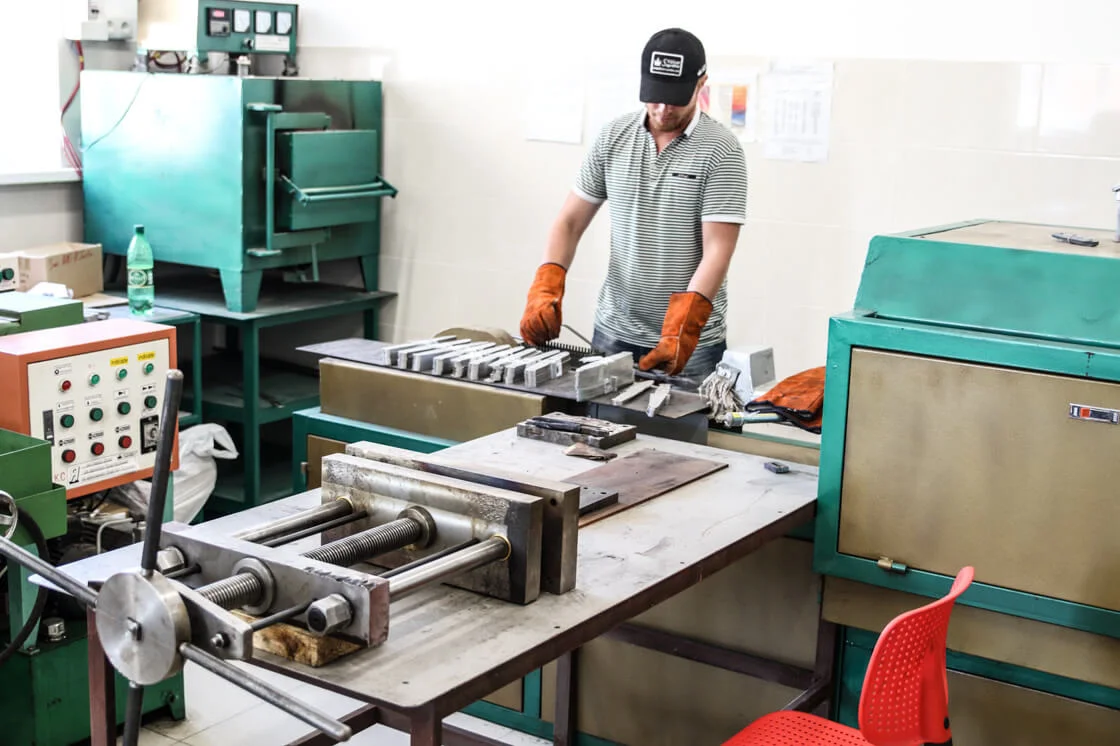
During austenitizing, carbides dissolve only to the extent intended for that grade. Rapid cooling then transforms most of the austenite to martensite, the hard matrix central to a hardened knife blade. Some austenite may remain after quenching.[3]
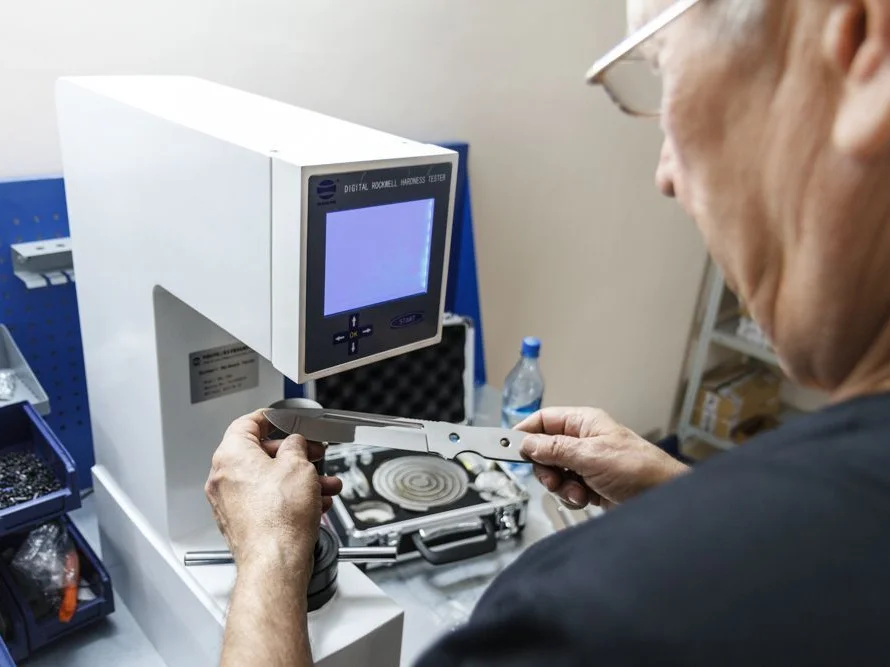
The target is not “the most martensite at any cost.” Retained austenite, carbide population, grain condition and the tempered martensitic matrix interact with hardness, toughness, edge stability, wear and corrosion performance. The optimum balance depends on the steel and what the knife must do.
Tempering changes that as-quenched structure. At suitable conditions, stresses fall, toughness improves and secondary carbides may precipitate in high-alloy steels. At unsuitable conditions, toughness or corrosion resistance can be impaired. The steelmaker’s current data sheet—not a copied internet recipe—sets the starting window.