



Prepare the matrix
Use the grade-specific hardening range and soak to place the intended carbon and alloying elements into austenite


Find your knife
From compact everyday carry to full-size field tools, start with the way you plan to use your knife.
Start here
Built for the job
See how steels, handle materials, sheath systems and controlled processes become a complete Kizlyar Supreme knife.
Explore the essentials
 The complete guideOpen Materials & Technologies
  Explore the hub sectionBlade steels
  Explore the hub sectionTechnologies & finishes
 Evidence before adjectives
Explore how steel choice, heat treatment, geometry and finishing shape performance in the real world.
Featured expert guides
Made in Dagestan
Meet the people, production experience and ideas behind Kizlyar Supreme knives.
Company essentials
Here when you need us
Find warranty information, authorised dealers and direct help from Kizlyar Supreme.
Support essentials
An extra step for lasting cutting performance: discover how Kizlyar Supreme uses controlled cold processing to bring more out of selected knife steels
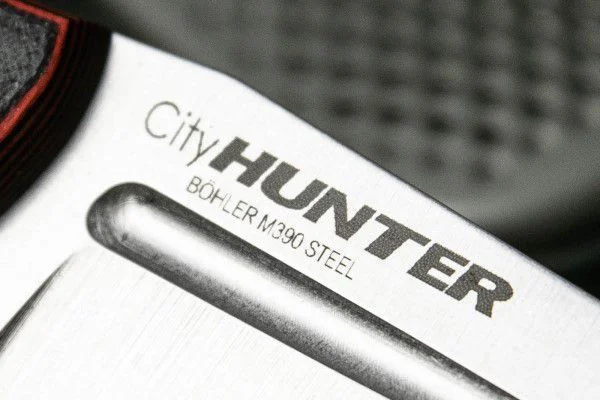
Cryogenic treatment is a supplemental step inside a steel-specific heat-treatment route. After quenching, some steels retain austenite that has not transformed to martensite. Controlled cooling below room temperature can transform more of it; the following temper then treats the newly formed martensite and develops the final structure.
When austenitized steel is cooled rapidly, much of its high-temperature austenite transforms to hard martensite. The transformation begins at a steel-specific Ms temperature and progresses as temperature falls. In high-carbon and high-alloy steels, the finish temperature may lie below room temperature, so part of the austenite remains.[1]
That retained austenite is not automatically a defect. A controlled amount can contribute toughness, while too much can lower hardness or reduce dimensional stability. The desired amount depends on the alloy, edge geometry, tempering route and use. The objective is a controlled balance—not simply “zero austenite.”
Cooling below room temperature extends the transformation opportunity. Research also reports changes in martensitic defect structure and fine-carbide precipitation during subsequent tempering, but these effects vary by material and cycle and are not equally visible in every steel.[4][5]
Terminology varies across industry. “Sub-zero,” “cold treatment,” “deep freezing” and “deep cryogenic treatment” may describe different temperature bands. The meaningful specification is the full time-temperature route and the measured result.
Use the grade-specific hardening range and soak to place the intended carbon and alloying elements into austenite
Cool fast and uniformly enough to obtain the intended structure while managing distortion and crack risk
Where the validated route calls for it, continue cooling to a controlled sub-zero or cryogenic level
Temper according to the steel-specific route; additional tempers may be required for high-alloy steels
Martensite formed during the cold step is newly formed and untempered. Uddeholm therefore states that the final operation must be tempering when sub-zero treatment is used for high dimensional stability.[1] A blade should never be treated as finished simply because it has returned from the cryogenic stage.
In a suitable steel-specific route, cryogenic processing helps develop hardness, wear resistance and dimensional stability. For the knife owner, the value is a deliberately processed blade built for lasting cutting performance. The cold step and the following tempering are selected together for the alloy.
Reducing retained austenite can reduce later transformation in service. This is why steelmakers emphasise sub-zero treatment for parts with demanding stability requirements.[1]
Suitable routes can increase hardness or wear resistance through additional martensite and changes developed during tempering. Uddeholm reports up to 1–2 HRC in some low-temperature-temper routes, but little or no increase in some high-temperature-temper routes
The complete balance matters. Kizlyar Supreme develops the cold step as part of the full route, rather than chasing hardness alone. Steelmaker guidance and modern reviews explain why toughness and corrosion must be considered alongside wear resistance.[3][5]
A 2022 M390/M398 study compared samples with and without a −78 °C step and showed that hardness and wear response changed with both the steel and tempering temperature.[7] This is exactly why Kizlyar Supreme treats cryogenic processing as precision engineering, not a slogan or one universal recipe. We develop the sub-zero step as part of the complete heat-treatment route for each steel, so customers receive the benefit of deliberately matched processing backed by experience across an expanding range of knife steels.
The programme began with powder steels and expanded as Kizlyar Supreme developed and validated steel-specific routes for a broader range of tool and stainless grades. The chronology below records that production development; the marking guide explains how to identify a treated knife.
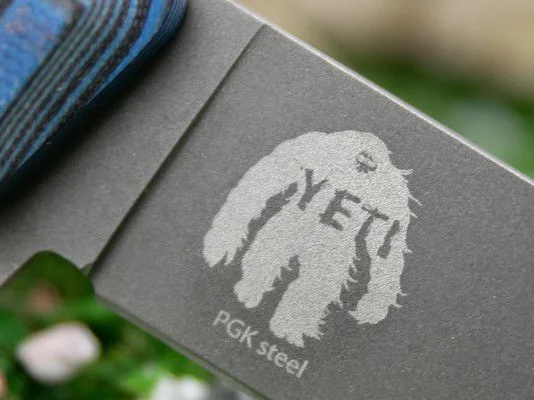
The programme began with highly alloyed powder-metallurgy steels, where retained-austenite control and demanding property targets justified the additional operation
Experience and process control then supported steel-specific cryogenic routes for selected production in these tool and stainless grades
Cryogenic treatment has now expanded to more AUS-10Co and VG-10 production and, where the defined batch route calls for it, selected AUS-8 batches
Knives that have received cryogenic treatment are normally identified by the word Cryo, a snowflake symbol or another model- or batch-specific designation confirming the process.
It does not align molecules. The evidence concerns phase transformation, martensitic structure, defects and carbide precipitation—not a mystical rearrangement.
It is not automatically liquid nitrogen. Sub-zero treatments use different target temperatures and equipment. The stated cycle matters more than the label.
It does not always improve every property. A gain in hardness or wear resistance may coincide with little change—or a trade-off—in toughness or corrosion response.
It cannot rescue an incorrect preceding cycle. Austenitizing, quenching, timing and tempering remain fundamental. Cryogenic treatment works only as part of the whole route.
It can transform part of the retained austenite left after quenching and alter the subsequent development of martensite and fine carbides during tempering. The magnitude depends on steel and cycle.
No. It is most relevant when the chosen hardening route leaves retained austenite or when testing shows a useful improvement. Some steels and tempering routes show little benefit.
No. Uddeholm reports up to 1–2 HRC in some low-temperature-temper routes, but little or no increase in some high-temperature-temper routes. Other properties may change independently of HRC.
Not automatically. The response varies; transforming soft retained austenite can reduce one source of toughness even while stability or wear resistance improves. The complete balance must be tested.
Yes. Newly formed martensite must not be left untempered. The steel-specific route should finish with the prescribed tempering cycle.
Kizlyar Supreme began with powder steels, expanded to PGK, Sleipner and N690, and now uses cryogenic treatment more broadly with AUS-10Co and VG-10 and in selected AUS-8 batches. A treated knife is normally identified by “Cryo,” a snowflake or another confirming designation. Not every pre-2025 treated knife was marked; if identification matters, confirm the exact model and batch with Kizlyar Supreme.
Discover the know-how behind our blades and find a Kizlyar Supreme knife that fits the way you work.
Explore our steels and technologies, choose a knife for your work, and look for the Cryo designation that identifies its additional processing.