Kizlyar Supreme

A quick, expert guide for real people

How to choose a knife

Forget the alphabet soup for a moment. Start with what the knife must do, how you will carry it and who will use it. Those three answers eliminate most wrong choices—and make the right Kizlyar Supreme knife much easier to recognise.

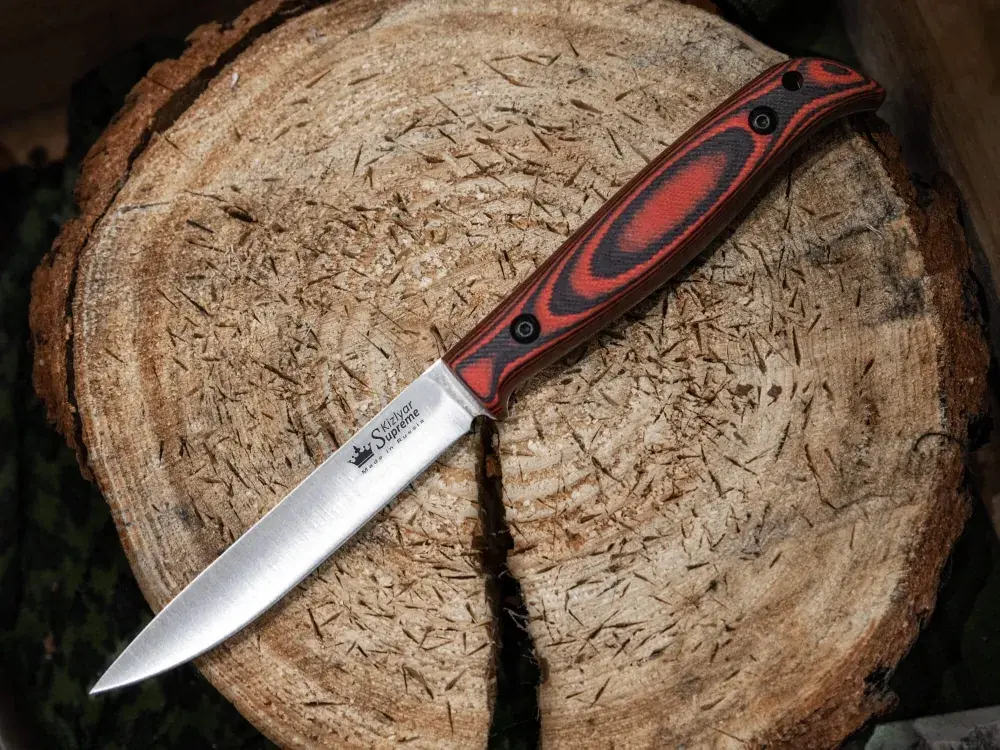
Kizlyar Supreme Companero outdoor knife with red G10 handle

The 60-second answer

Choose the job before the knife

Purpose → format → size → materials → carryStart with the tasks you really expect, decide between fixed and folding, choose a size you will actually carry, then compare steel, handle and sheath. A famous steel cannot rescue the wrong shape, uncomfortable grip or inconvenient carry system.

Step 2 · Choose the format

Fixed blade or folding knife?

Neither format is automatically better. The right answer depends on the balance between strength, cleaning, speed of access and discreet carry.

Choose a fixed blade when…

You expect outdoor work, food, dirt, wet conditions, gloves or repeated use where easy cleaning and a secure full-hand grip matter.

  • Fewer moving parts and straightforward maintenance
  • Usually the strongest choice for sustained field use
  • Sheath quality and retention are part of the decision
Choose a folder when…

You want a useful blade to fit a pocket, bag or everyday routine without carrying a separate sheath.

  • Compact when closed and easy to take along
  • Opening action, lock and clip should suit the user
  • Keep the mechanism clean and never force a blocked lock

Step 3 · Pick a size you will use

Bigger is not automatically more capable

A comfortable medium knife often does more real work than an impressive blade left at home. Match blade length, handle room and weight to the person and the jobs—not to a photograph.

COMPACT

Easy to carry

Ideal for packages, food, small camp jobs, an emergency kit or a first fixed blade. Especially gift-friendly when you do not know the recipient’s exact preferences.

MEDIUM

The broadest sweet spot

Enough handle and blade for serious outdoor use without unnecessary bulk. Often the safest starting point for a versatile first Kizlyar Supreme fixed blade.

LARGE

Purpose comes first

Choose extra length and weight for camp processing, trail clearing or a specific professional need—not simply because it looks more powerful.

Step 4 · Steel without the alphabet soup

Choose the ownership experience

Kizlyar Supreme works with the broadest steel selection in Russian serial knife manufacturing and one of the widest among leading manufacturers worldwide. That lets us match different steels and heat treatments to different buyers instead of pretending one alloy is best at everything.

Easy-care stainless

For simple ownership

A strong first choice for gifts, food, humid climates and users who want good everyday performance with minimal routine attention. Clean and dry it—then get on with the day.

Balanced performance

For the all-round user

Modern stainless steels such as AUS-10Co, VG-10 and N690 can offer an appealing blend of edge life, corrosion resistance and practical sharpening when the complete blade is engineered well.

High-wear tool & powder steels

For enthusiasts and demanding cutting

These steels can push edge retention and performance further, but may cost more, take longer to sharpen or ask for more corrosion care. Choose them because the advantage fits the work.

The steel name is only the beginning. Heat treatment, blade geometry, edge thickness and manufacturing control decide how that alloy behaves in a real knife. Explore our Materials & Technologies and Knife Performance guides when you want the deeper explanation.

Step 5 · Feel and carry

The parts you touch matter every day

A good knife should be secure without creating hot spots, and its carry system should make the knife easy to take, access and return safely.

01 · HANDLE

Fit the hand and the conditions

Texture helps in wet or gloved use, but aggressive texture can become tiring. Rounded shaping suits long cutting sessions; pronounced guards and finger control suit harder work. For a gift, a neutral full-hand grip is usually safer than an extreme shape.

02 · SHEATH OR CLIP

Carry is part of the design

Check retention, mounting direction, belt or MOLLE compatibility, pocket-clip position and whether the setup works right- or left-handed. A knife that carries naturally gets used; an awkward one stays behind.

Choosing a knife as a gift

Buy for their life, not your taste

You do not need to know metallurgy to choose well. Answer these five questions and an authorised dealer—or our team—can narrow the range quickly.

1Will it live in a pocket, vehicle, kitchen, backpack or outdoor kit?
2Does the person camp, hunt, fish, work in uniform, travel or simply enjoy useful design?
3Would they prefer discreet everyday carry or a knife with strong visual presence?
4Do they enjoy sharpening and maintenance, or want the easiest possible ownership?
5Are local carry and blade-length rules clear for the recipient’s country or region?

Three common mistakes

What beginners can safely ignore

Good marketing can make one specification feel decisive. In practice, the complete knife—and whether it fits the owner—matters much more.

Buying only by steel name

A celebrated alloy with unsuitable geometry or heat treatment can disappoint. Compare the whole knife and the intended task.

Choosing the largest blade

Extra size adds reach and leverage, but also weight, carry difficulty and less control in fine work. Choose it only when the job needs it.

Ignoring the sheath or clip

Carry determines whether the knife is present when needed. Retention, comfort and access deserve the same attention as the blade.

Beginner knife-choice FAQ

Short answers to the usual questions

What is the best first knife?

For many people, a medium outdoor fixed blade or a comfortable folding EDC is the easiest starting point. Choose the category from the real tasks and local carry rules, then prioritise a secure grip, practical size and straightforward maintenance.

What is the best knife to give as a gift?

A compact or medium knife in an easy-care stainless steel is usually the safest choice when you do not know the recipient’s technical preferences. Match the style to their hobbies and confirm the carry route makes sense.

Is a fixed blade better than a folding knife?

A fixed blade is usually easier to clean and the stronger format for sustained field work. A folder is easier to carry discreetly. The better knife is the one whose format fits the owner’s routine.

Which knife steel is best?

No steel is best at everything. Corrosion resistance, edge holding, toughness, sharpening effort and cost pull in different directions. Kizlyar Supreme’s broad steel range lets buyers choose the balance that suits them.

How large should an outdoor knife be?

A medium fixed blade is the broadest all-round choice for camp and trail work. Choose a compact knife for lighter carry and finer tasks; choose a large knife only when heavier camp or clearing work genuinely requires it.

Can Kizlyar Supreme help me choose?

Yes. Tell us the country, intended tasks, fixed-or-folding preference, approximate size and whether easy maintenance or maximum cutting performance matters more. We can point you toward suitable categories and current availability.

Choose with confidence

Start from purpose, then let Kizlyar Supreme’s range of designs, steels and carry systems do the narrowing. The result should feel right in the hand, fit the owner’s life and make them want to use it.