


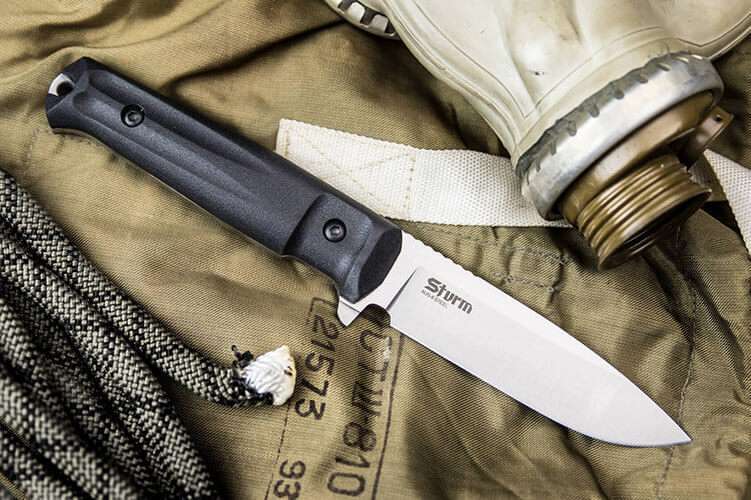

Carbon enables hardness
Carbon dissolved in the matrix helps produce hard martensite during quenching. It also combines with alloying elements to create carbides that can contribute to wear resistance.


Find your knife
From compact everyday carry to full-size field tools, start with the way you plan to use your knife.
Start here
Built for the job
See how steels, handle materials, sheath systems and controlled processes become a complete Kizlyar Supreme knife.
Explore the essentials
 The complete guideOpen Materials & Technologies
  Explore the hub sectionBlade steels
  Explore the hub sectionTechnologies & finishes
 Evidence before adjectives
Explore how steel choice, heat treatment, geometry and finishing shape performance in the real world.
Featured expert guides
Made in Dagestan
Meet the people, production experience and ideas behind Kizlyar Supreme knives.
Company essentials
Here when you need us
Find warranty information, authorised dealers and direct help from Kizlyar Supreme.
Support essentials
More time using your knife, less time worrying about rust. Discover why stainless steel makes ownership easier—and how Kizlyar Supreme puts its strengths to work
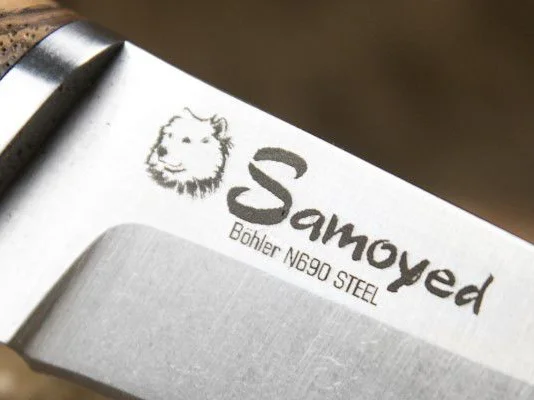
The international stainless-steel definition begins with an iron alloy containing at least 10.5% chromium and no more than 1.2% carbon.[1] That chemistry can create remarkable resistance to rust. It does not make steel chemically untouchable.
Chromium makes the protective response possible. The hardened microstructure, surface condition, environment and care determine how well that protection holds in a real knife.
“Stainless” is an established engineering category, so it is not a marketing invention. The myth is the literal reading of the English name. Every stainless grade has a corrosion limit, and a knife adds an unusually thin edge, grinding marks, handling residues and real outdoor exposure.
When sufficient chromium is available at the surface, it reacts with oxygen to form a thin, adherent chromium-rich oxide film. Unlike loose red iron oxide, this passive film separates the underlying metal from its environment and reforms when oxygen is present after minor damage.[1]
Passivity is conditional. Chloride ions can initiate local breakdown and pitting; deposits and tight crevices can create chemically different micro-environments; acids and warm, continuously wet conditions can accelerate attack. Grade selection and surface condition therefore remain important even inside the stainless family.[2]
A small corrosion pit is not merely cosmetic at the cutting apex. It is a notch in a very thin, highly loaded region. Preventing corrosion helps preserve both appearance and edge integrity.
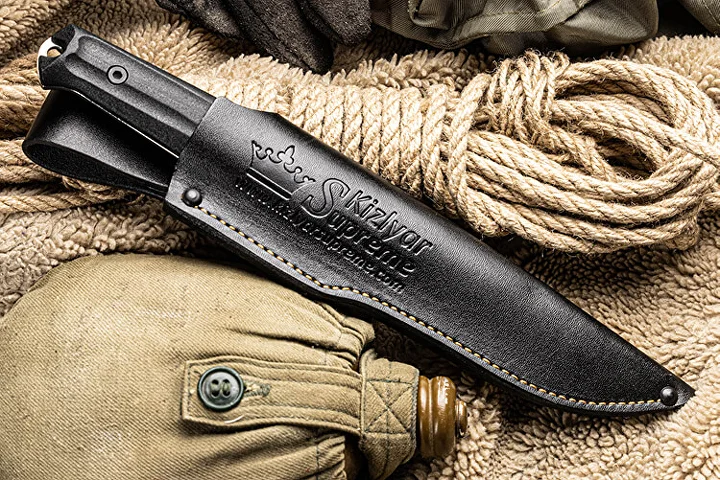
Highly corrosion-resistant austenitic stainless steels are excellent for sinks, tanks and many medical products, but they are not normally the first choice for a hard, wear-resistant knife edge. Knife blades usually use martensitic stainless steels because they can be hardened to support an apex.[3]
Carbon dissolved in the matrix helps produce hard martensite during quenching. It also combines with alloying elements to create carbides that can contribute to wear resistance.
Chromium in the matrix supports corrosion resistance; chromium in carbides contributes to the hard-particle population. Heat treatment influences how it is partitioned.
Nominal chromium alone cannot predict a blade. Carbon, molybdenum, nitrogen, carbide volume, heat treatment, finish and exposure all change the result.
Austenitizing controls how much carbide dissolves and therefore how much carbon and chromium enter the matrix. Tempering, retained austenite, grinding heat and finish also matter. The name engraved on a blade is the start of the specification, not a complete performance certificate.[4]
Corrosion is a system outcome. It cannot be assigned to chemistry alone or dismissed as user error alone.
Salt water, perspiration, acidic food, blood, warm condensation and prolonged wet storage are more aggressive than clean, dry air.
The alloy design and chromium remaining in the hardened matrix set the underlying resistance. A steel-specific thermal route is essential.
Rough grooves, engraving recesses, embedded carbon-steel particles, fingerprints and food residues can become initiation sites.
Drying promptly, removing residues and using a suitable protective film during storage interrupt the conditions corrosion needs.

Our factory demonstration puts unfinished samples of U8, D2, AUS-10Co, 420 and N690 through three days of water and air exposure. Seeing the results makes alloy choice tangible and shows why we match steel to the work and environment ahead. It is a practical demonstration rather than a standardised ranking.
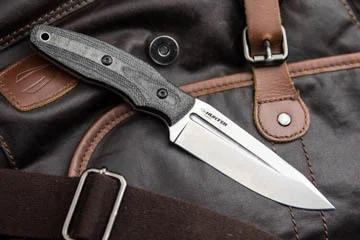
After use: remove salt, acids, food and dirt with appropriate cleaning, then dry the blade completely. Do not leave a knife in a dishwasher or in a wet sheath.
Before storage: avoid fingerprints and trapped moisture. Store the knife dry; for long storage or corrosive environments, apply a thin protective product appropriate to the knife’s intended use. If the blade will contact food, use a product expressly suitable for that purpose and follow its manufacturer’s instructions.
If a spot appears: address it early with a non-destructive method appropriate to the finish. Aggressive abrasives can alter stonewash, satin, polish, markings or edge geometry. If uncertain, contact the manufacturer.
Yes, stainless steel is a real engineering family defined by sufficient chromium to form a passive surface film. The name means strong corrosion resistance under suitable conditions, not absolute immunity from rust or pitting.
The widely used industrial definition starts at 10.5% chromium by mass, with carbon no higher than 1.2%. Actual knife corrosion behaviour also depends on carbon, other elements, chromium in the matrix, heat treatment, finish and environment.
Knife edges require high hardness and wear resistance. Hardenable martensitic stainless steels are normally chosen because they can provide those properties; very corrosion-resistant austenitic grades generally cannot be heat treated to the same kind of knife-edge hardness.
Yes. Their resistance can be very high, but salt, acids, deposits, contaminated surfaces, warm moisture or long wet storage can still cause staining or pitting. Grade, heat treatment, finish and care all influence the outcome.
No finish makes steel immune. A properly produced smooth mass-finished surface can be easier to maintain than a rough, deeply grooved surface, but the alloy, heat treatment, cleanliness and exposure remain decisive.
For ordinary use, prompt cleaning and complete drying are the essentials. A suitable protective film is helpful for long storage or aggressive environments. Use a food-contact-suitable product where relevant and follow its instructions.
Discover the know-how behind our blades and find a Kizlyar Supreme knife that fits the way you work.
From easy-care outdoor workhorses to premium powder steels, explore the stainless options Kizlyar Supreme combines with purposeful design and controlled heat treatment.