


Approach a complex shape
Forging can move material efficiently into curved, tapered or integral forms, reduce later machining and create shapes that are impractical to cut directly from flat stock.

Find your knife
From compact everyday carry to full-size field tools, start with the way you plan to use your knife.
Start here
Built for the job
See how steels, handle materials, sheath systems and controlled processes become a complete Kizlyar Supreme knife.
Explore the essentials
 The complete guideOpen Materials & Technologies
  Explore the hub sectionBlade steels
  Explore the hub sectionTechnologies & finishes
 Evidence before adjectives
Explore how steel choice, heat treatment, geometry and finishing shape performance in the real world.
Featured expert guides
Made in Dagestan
Meet the people, production experience and ideas behind Kizlyar Supreme knives.
Company essentials
Here when you need us
Find warranty information, authorised dealers and direct help from Kizlyar Supreme.
Support essentials
Advanced steels, consistent cutting geometry and excellent value: discover why precision-made rolled stock is a powerful foundation for modern Kizlyar Supreme knives
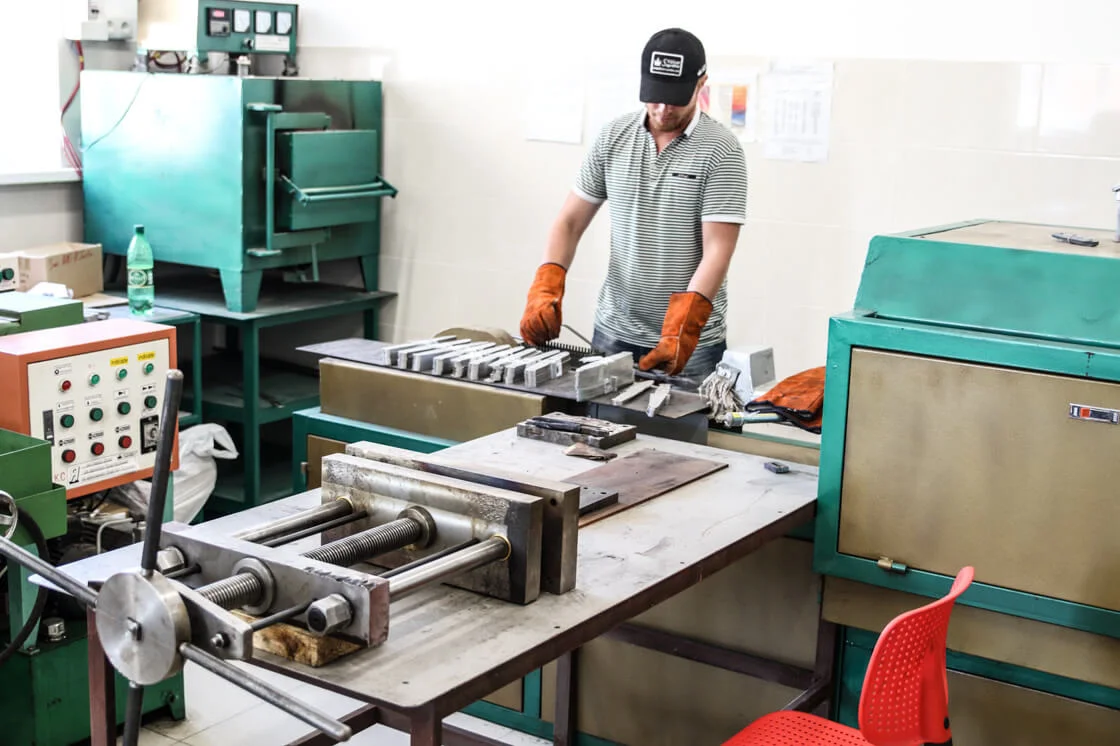
Modern rolled stock opens an impressive choice of clean, precisely produced alloys—from practical stainless workhorses to advanced powder steels. Kizlyar Supreme combines that material choice with controlled cutting, grinding and heat treatment to deliver consistent working performance at useful value. Skilled blade forging remains a valid route; the finished knife is what earns your confidence.
A hammer does not compress sound steel into a denser, magically sharper substance. Solid steel is already effectively dense. Useful changes come from controlled deformation and thermal history; harmful changes can also occur when temperature, time or atmosphere is wrong.
Modern knife sheet is not molten metal poured into a blade-shaped tray. It is a wrought mill product with a substantial deformation and thermal history before the knifemaker receives it.
Uddeholm describes atomised powder consolidated by hot isostatic pressing into an ingot, which is then hot-worked by ordinary forging and rolling into product form.[2] “Powder,” “forged” and “sheet” describe different stages and are not mutually exclusive labels.
Forging moves hot material toward a blade shape. Stock removal begins with mill-worked sheet or strip. Both routes still depend on sound steel, temperature control, geometry, final heat treatment and verification.


Engineering forgings earn their reputation when material flow, reduction and shape are designed together. That principle is valid—but it should not be stretched into a blanket claim about every hand-forged knife.
Forging can move material efficiently into curved, tapered or integral forms, reduce later machining and create shapes that are impractical to cut directly from flat stock.
In a suitably designed structural part, forging can align elongated inclusions and flow lines with load paths.[4] A knife still needs evidence that this orientation benefits its actual geometry and loading.
Pattern welding, laminated blades and forge-welded constructions use forging for material architecture as well as shape. Their craft, appearance and function can have genuine value.
Visible “flow” follows elongated inclusions or bands created by working; metallurgical grain size is a different microstructural measurement controlled strongly by thermal history. Saying that a blade “follows the grain” does not prove fine grains or a superior edge.
The right conclusion is more interesting than “old is bad” or “handmade is best.”
Not for sound modern wrought stock. Forging can close internal voids in certain large cast workpieces, but a commercial knife bar is already consolidated. Ordinary blade forging does not pack atoms closer to create a special edge.
Yes. Large industrial reductions help break down cast structures and carbide networks. Results depend on alloy, temperature, deformation ratio and subsequent normalising or annealing—not on hammer marks as proof.
False. Sheet and strip are heavily wrought by rolling. They may have directionality from inclusions or banding; reputable producers control chemistry, cleanliness, microstructure, flatness and thickness.
Too much time or temperature can coarsen grains, oxidise and decarburise the surface; forging too cold can crack steel. Later hardening can also be wrong. Process control matters throughout.[5]
Modern precision strip is delivered in broad grade and dimension ranges, annealed or cold rolled, with controlled thickness, shape, straightness, surface and edge conditions. Alleima describes automatic gauge control and roll-gap symmetry systems used to maintain dimensional accuracy.[3]
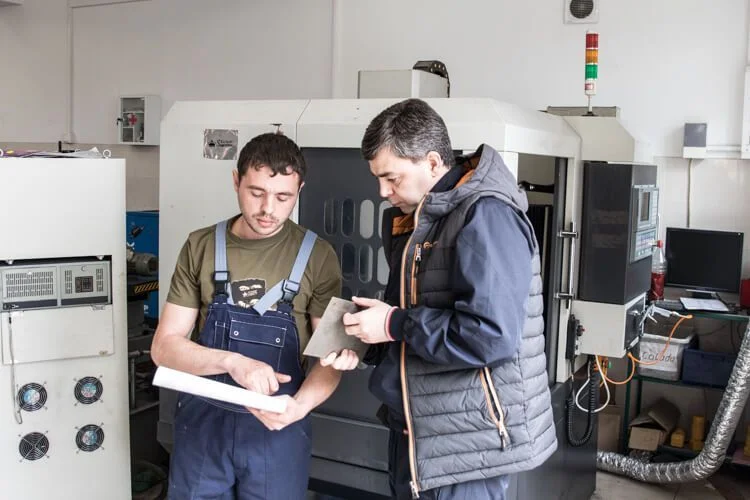
For serial knife production, this controlled starting stock supports efficient nesting, laser or waterjet cutting, blanking, repeatable grinding and predictable furnace loading. Less variation before hardening makes it easier to hold geometry and process windows from one batch to the next. At Kizlyar Supreme, blade blanks begin in sheet steel selected for the model, then precision cutting, grinding and steel-specific heat treatment turn that material into a knife.[9]
It also opens a wide alloy library—from simple martensitic stainless grades to ESR and powder-metallurgy steels—that may be difficult, wasteful or metallurgically risky to hand forge. For Kizlyar Supreme customers, the reward is an advanced alloy choice, a repeatable cutting design and high performance without making every blade a one-off craft project.
The strongest position is not anti-forging. It is anti-shortcut.
Integral guards, distal taper, curved forms, composite construction, material efficiency, restoration of a suitable workpiece and the cultural value of skilled craft can all justify forging.
Accurate stock, sophisticated mill alloys, repeatable batches, automated profile cutting, controlled costs and serial quality make rolled sheet or strip the rational route for many modern knives.
Named grade and source, sound starting stock, appropriate thermal history, controlled decarburisation, final heat treatment, hardness verification, geometry and honest performance limits.
No. Strength and toughness depend on steel quality, microstructure, heat treatment, geometry, defects and load direction. Forging can offer real benefits in a properly designed process, but the word alone proves none of them.
Commercial wrought knife steel is already consolidated and effectively dense. Forging can close voids in some cast workpieces, but ordinary forging of sound bar does not pack the steel into a uniquely dense cutting edge.
No. Sheet and strip are product forms available in simple, advanced remelted and powder-metallurgy grades. Reputable mills control chemistry, cleanliness, microstructure, dimensions and delivery condition.
Large, correctly controlled hot-working reductions can break down cast carbide networks. Modern mill stock has already undergone substantial hot work, and typical blade forging does not automatically add a useful refinement. High-alloy steels may be particularly sensitive to improper forging.
Working below the safe temperature range can initiate cracks. Excess heat or time can promote grain growth, scale, oxidation and decarburisation. The correct window and post-forging thermal treatment are grade-specific.
Kizlyar Supreme uses controlled mill-produced stock suited to repeatable profiling, grinding and steel-specific heat treatment. This route provides access to a broad alloy range and supports consistent geometry and value across production batches.
Discover the know-how behind our blades and find a Kizlyar Supreme knife that fits the way you work.
Explore the steels and technologies behind Kizlyar Supreme knives: advanced material choice, precise processing and purposeful design working together for you.