


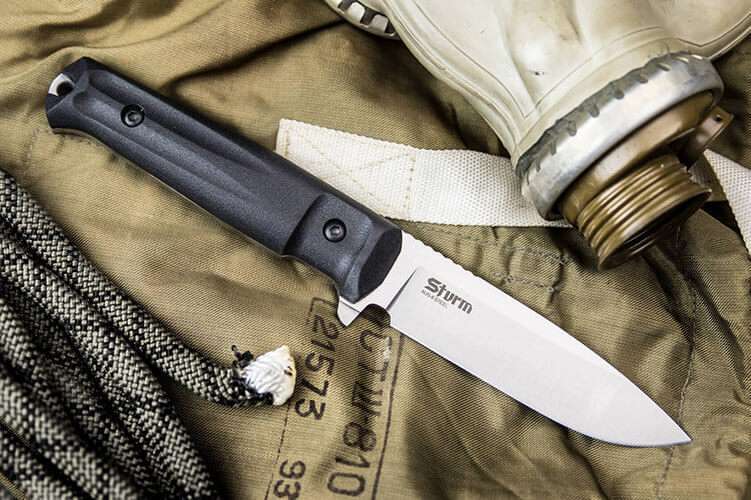

Scalpels and surgical blades
A fine cutting edge needs high hardness, wear resistance, consistent grinding and adequate corrosion resistance. Alleima identifies martensitic 13C26 as a standard grade for surgical blades and razors.[5]


Find your knife
From compact everyday carry to full-size field tools, start with the way you plan to use your knife.
Start here
Built for the job
See how steels, handle materials, sheath systems and controlled processes become a complete Kizlyar Supreme knife.
Explore the essentials
 The complete guideOpen Materials & Technologies
  Explore the hub sectionBlade steels
  Explore the hub sectionTechnologies & finishes
 Evidence before adjectives
Explore how steel choice, heat treatment, geometry and finishing shape performance in the real world.
Featured expert guides
Made in Dagestan
Meet the people, production experience and ideas behind Kizlyar Supreme knives.
Company essentials
Here when you need us
Find warranty information, authorised dealers and direct help from Kizlyar Supreme.
Support essentials
The name sounds reassuring—but what makes a knife worth choosing? Discover why the actual steel, heat treatment and blade design matter more to your cutting experience
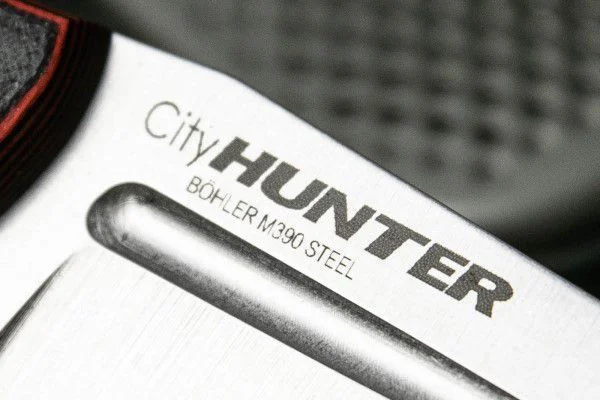
Real surgical instruments use carefully specified metals, but no single chemical composition owns the name. Current standards recognise several stainless-steel classes because a scalpel, forceps, powered bone saw and implant do fundamentally different jobs.[1][2]
A professional material claim becomes stronger as it moves from a broad phrase to a named alloy, relevant standard, controlled condition and verified finished product.
It cannot prove a particular stainless grade, hardness, corrosion-test result, biocompatibility, sterilisation durability, edge performance or compliance with a medical-device standard. If a seller gives only “surgical steel,” the material description is incomplete.
A standard number is useful only when its scope matches the product. “Used in surgery” does not make an instrument material interchangeable with an implant material.
| Reference | What it covers | What it does not establish by itself |
|---|---|---|
| ASTM F899-23Wrought stainless steels for surgical instruments | Chemical requirements across austenitic, martensitic, precipitation-hardening and ferritic classes.[2] | Its typical hardness and heat-treatment information is reference data; most finished properties are governed elsewhere or by agreement. |
| ISO 7153-1:2016Metals for standard surgical instruments | Metals commonly used in general surgery, orthopaedics and dentistry.[1] | It is not intended for special applications such as implantology and minimally invasive surgery, though parts may be relevant. |
| ISO 5832-1:2024Wrought stainless steel for surgical implants | Characteristics and test methods for an implant alloy corresponding to UNS S31673 in ASTM F138/F139.[3] | It does not turn every instrument steel—or every consumer product called “surgical”—into implant material. |
Medical use is demanding precisely because no one property is enough. The design has to balance corrosion, cleaning and sterilisation with cutting, fatigue, strength, surface quality and sometimes long-term tissue contact.
A fine cutting edge needs high hardness, wear resistance, consistent grinding and adequate corrosion resistance. Alleima identifies martensitic 13C26 as a standard grade for surgical blades and razors.[5]
Oscillating or reciprocating blades add fatigue and toughness demands. Alleima positions martensitic 7C27Mo2 for surgical power-tool blades, showing that one medical cutting task does not define all others.[5]
An implant remains in the body and belongs to a separate standards and validation regime. Vacuum-remelted 316LVM is one example offered for implant applications; it is not selected to behave like a hard knife edge.
Austenitic stainless steels can offer excellent corrosion resistance and formability but are not hardened by the martensitic transformation used for many cutting blades. Martensitic grades can be heat treated to high hardness, which supports an edge, but their chemistry and processing require a deliberate corrosion–hardness balance.
Precipitation-hardening steels can combine strength and corrosion resistance for specialised components. Ferritic stainless steels serve still other instrument applications. ASTM F899 includes all four classes; that fact alone disproves the idea of one universal “surgical steel.”[2]
Even within a listed chemistry, an instrument is not finished when the melt is made. Forming, machining, heat treatment, grinding, passivation, cleaning, corrosion testing and the product standard all contribute to suitability.
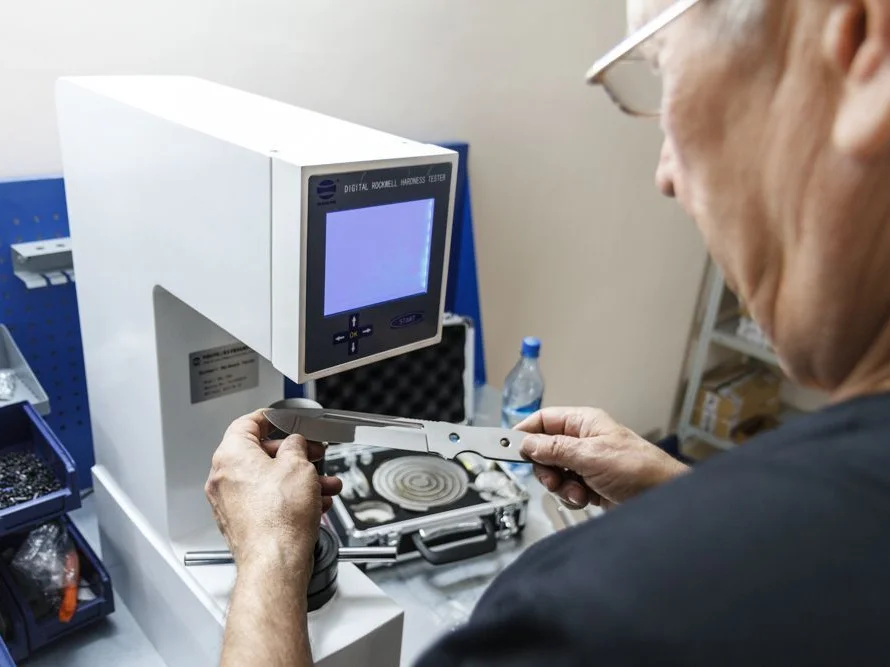
A transparent knife specification should let you understand what the material is and why it suits the design.
Look for a recognised designation, not “surgical,” “German,” “Japanese” or “high-carbon” on its own. A grade establishes a chemistry window, not finished quality.
A dependable maker matches heat treatment, hardness target, blade geometry and finish to the knife’s intended work.
Corrosion resistance, food contact, instrument use, biocompatibility and sterilisation are different claims with different evidence. One does not automatically prove another.
For regulated medical products, applicable standards, test reports and conformity documentation matter. For a knife, published grade, controlled heat treatment and honest care guidance are more useful than a medical-sounding adjective.
No. It is a broad commercial phrase. Surgical-instrument standards include multiple stainless-steel classes and many individual compositions selected for different functions.
No. Standard surgical instruments and implants have different scopes. ISO 5832-1:2024 specifies a particular wrought stainless implant alloy; the phrase “surgical steel” does not demonstrate compliance with it.
Many surgical instruments are made from stainless steels, but ISO 7153-1 addresses metals more broadly. Even within stainless steels, ASTM F899 includes austenitic, martensitic, precipitation-hardening and ferritic classes.
Not by itself. Knife performance depends on the exact grade, cleanliness and microstructure, heat treatment, hardness, blade and edge geometry, finish, intended use and quality control.
No blanket conclusion is justified from the phrase. Safety and suitability depend on the defined alloy, finished product, type and duration of contact, surface condition, manufacturing controls and the applicable regulatory evidence.
The scalpel must form and retain a very fine cutting edge during limited use. An implant must sustain long-term body contact and mechanical demands. Different functions require different material balances and standards.
Discover the know-how behind our blades and find a Kizlyar Supreme knife that fits the way you work.
Explore our named blade steels and discover the heat treatment and practical design that turn each one into a rewarding Kizlyar Supreme knife.